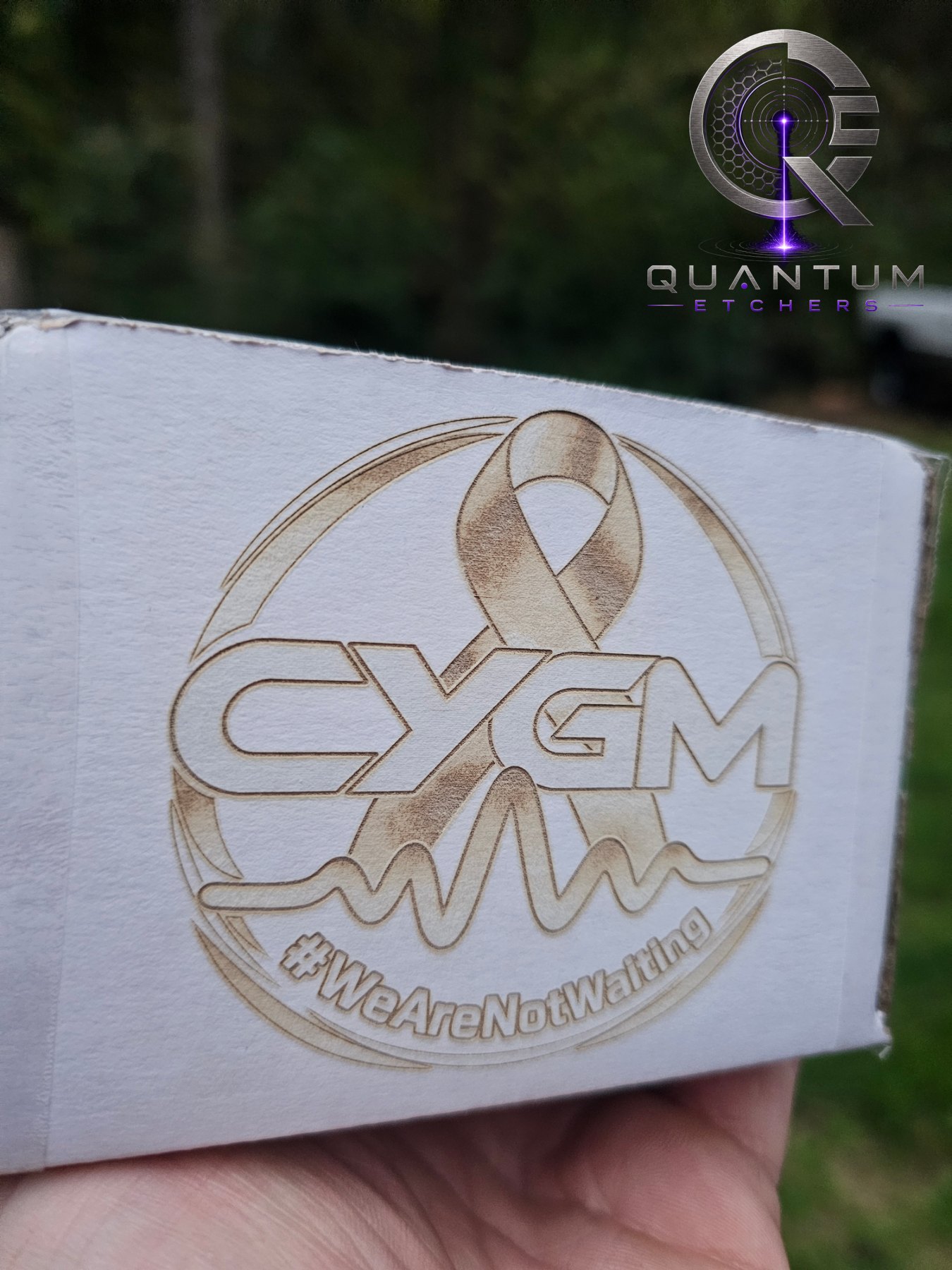
Wood
Great for signs, gifts, and décor. Burns beautifully with high contrast.
Engrave
Cut
 Quantum Etchers
We cut, mark, and engrave wood, metal, glass, leather, and more with surgical accuracy. Whether it's a custom gift, a branded product, or a one-of-a-kind piece — we get the details right.
Covington, Washington 8 materials Cut · Engrave · Etch · Oxidize One-off to production run
Great for signs, gifts, and décor. Burns beautifully with high contrast.
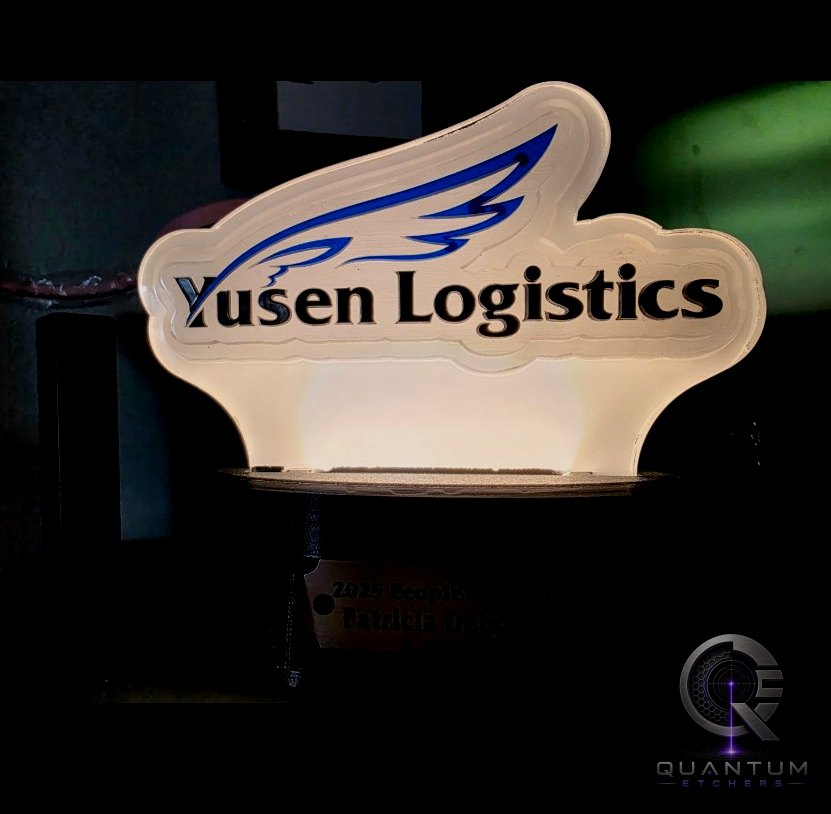
Clean edges, vibrant color options. Ideal for awards and display pieces.
Rich, permanent etching. Popular for wallets, journals, and accessories.
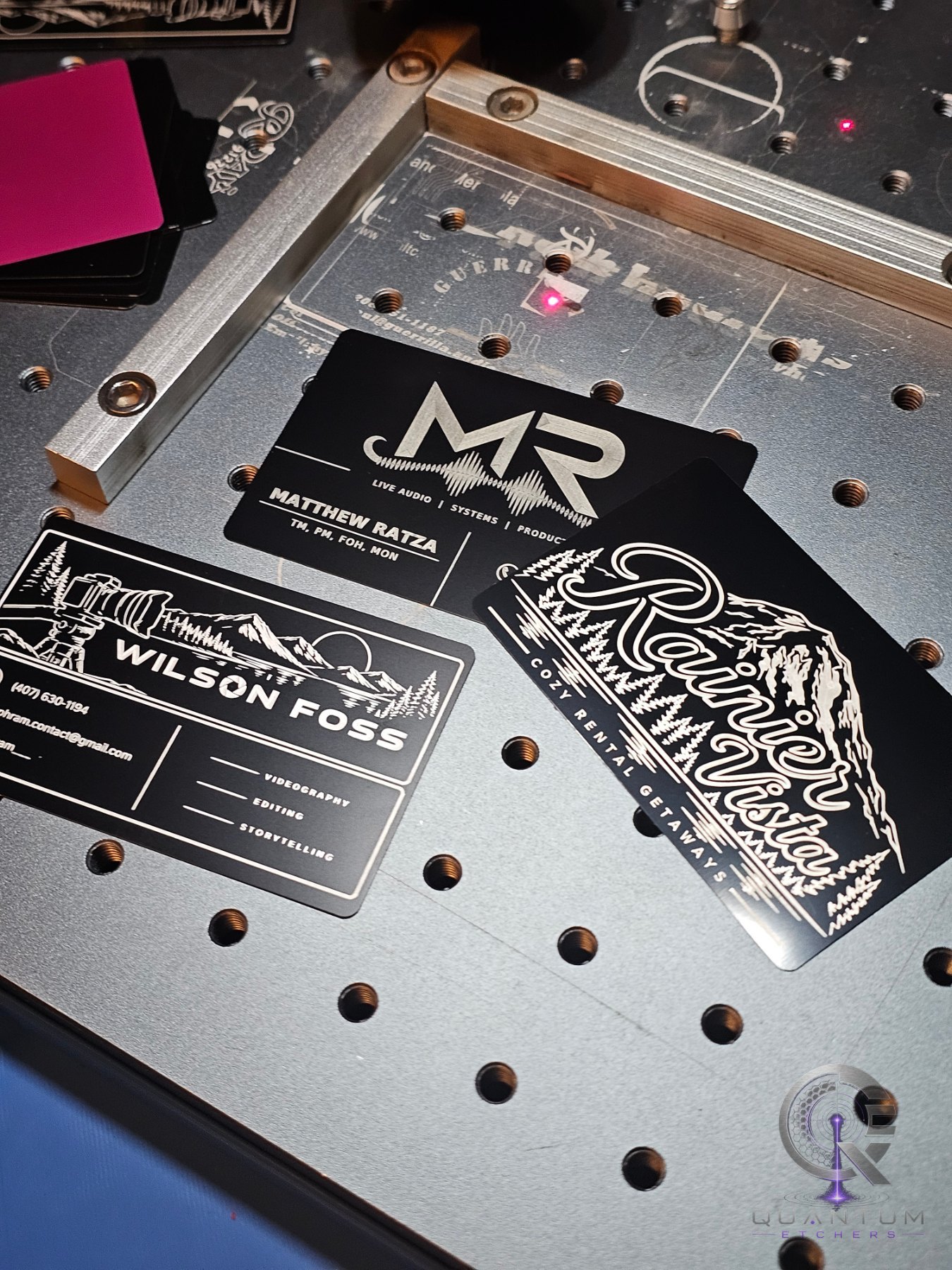
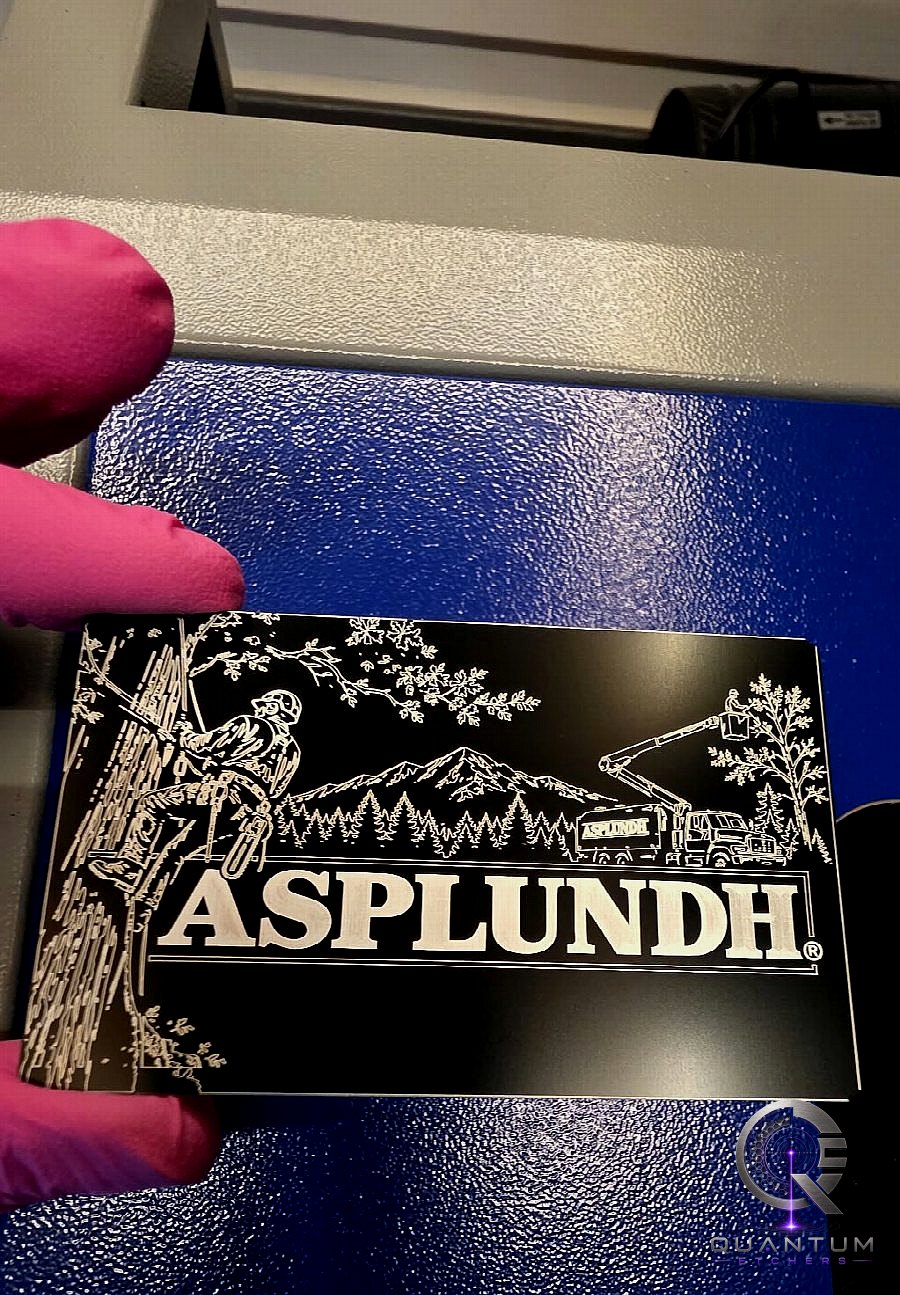
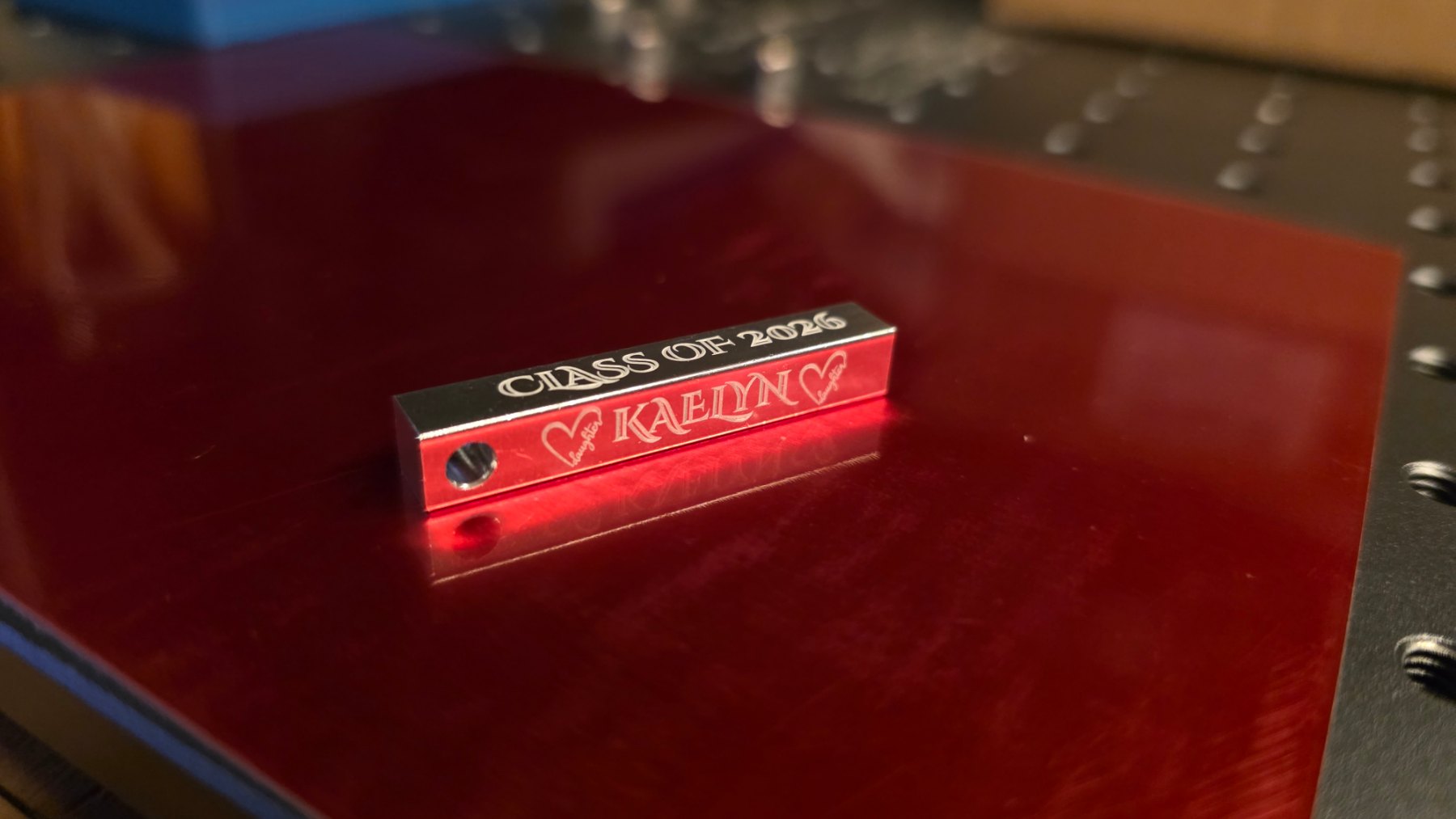
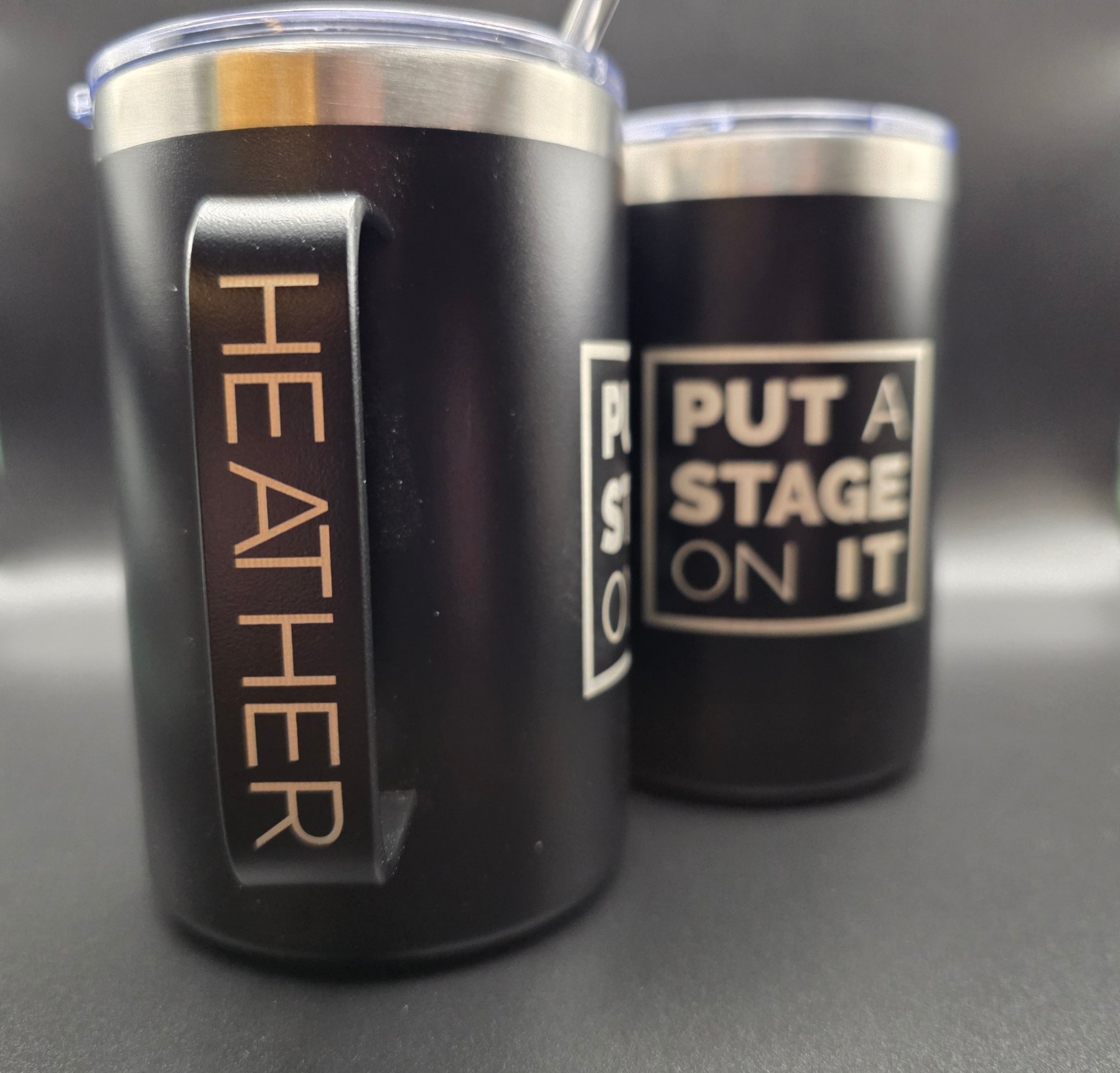
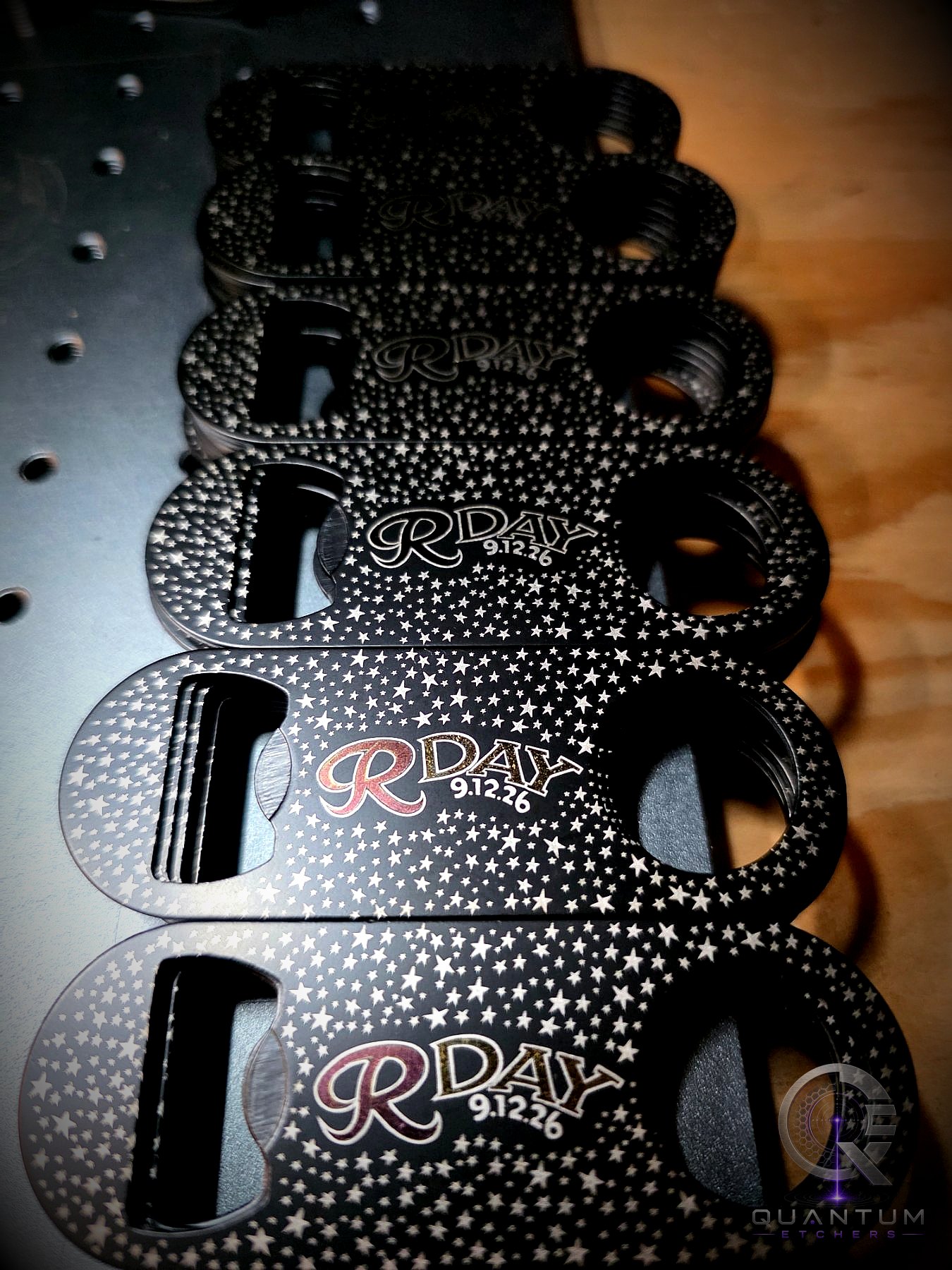
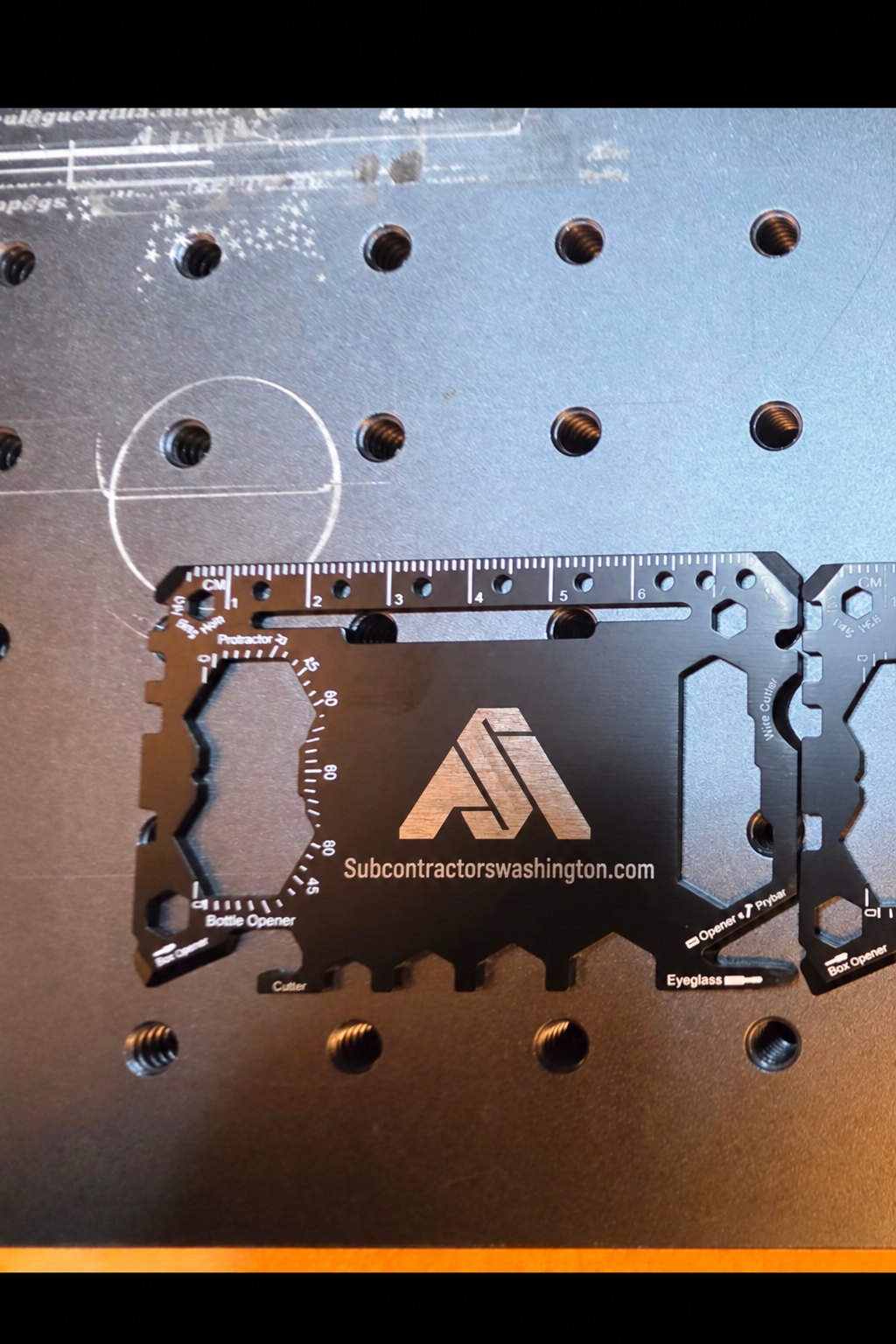
Anodized aluminum and coated metals engrave with precise detail.
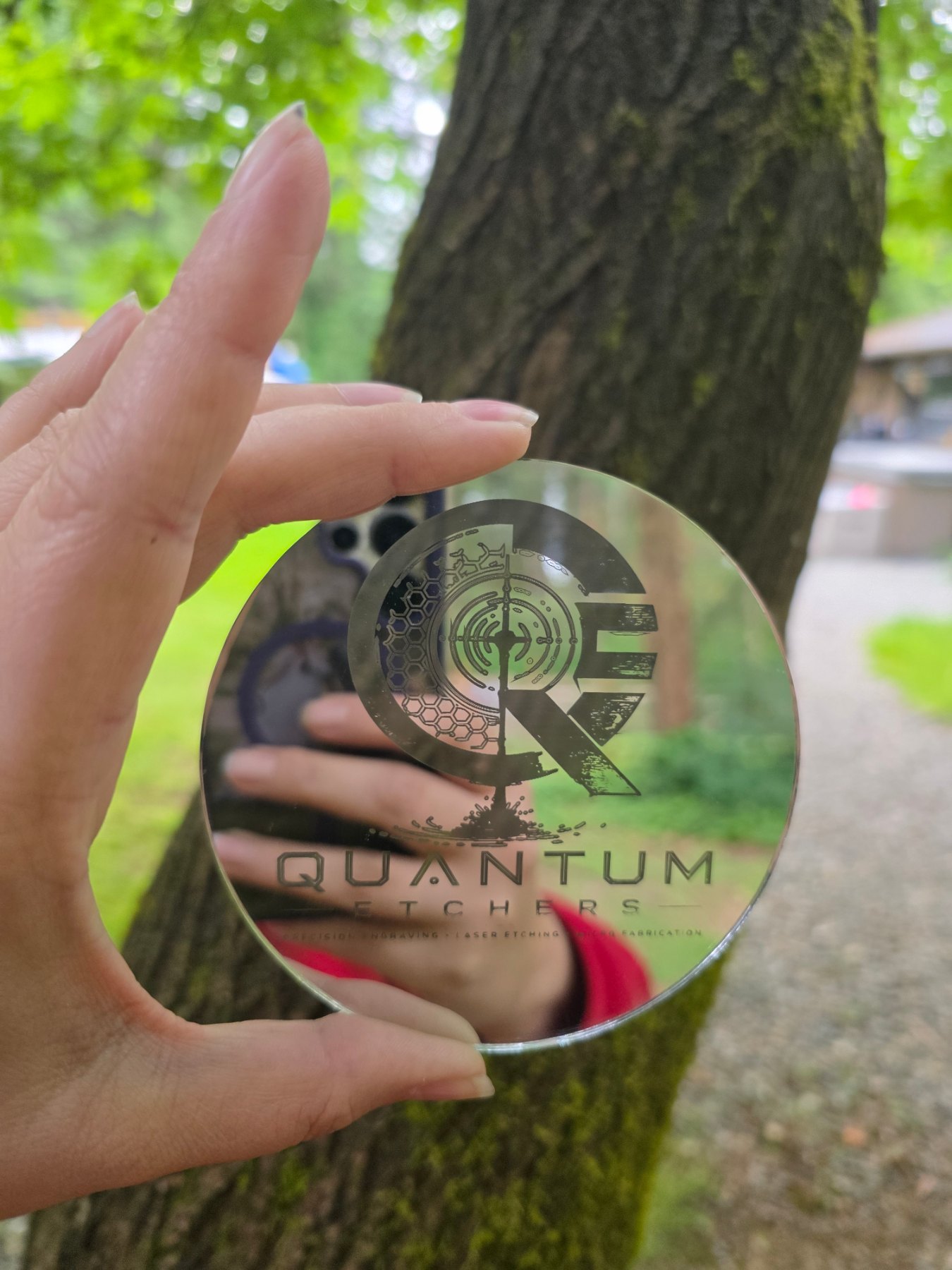
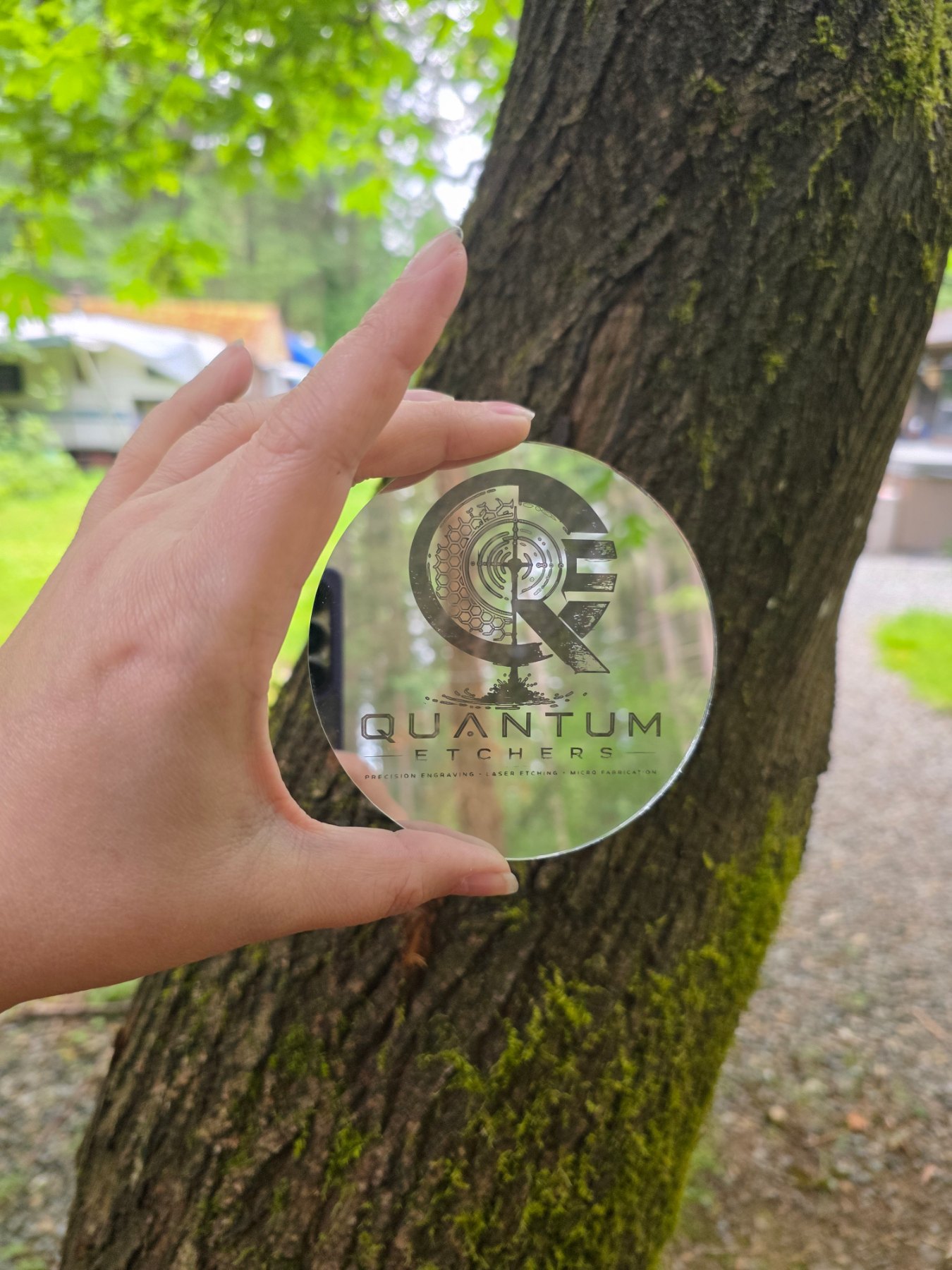
Frosted, elegant finish. Perfect for drinkware, mirrors, and windows.
Natural texture with lasting marks. Great for coasters and memorial pieces.
Smooth, consistent surface used for plaques and countertop accents.
Oxidize and colorize the surface for vivid, permanent designs.
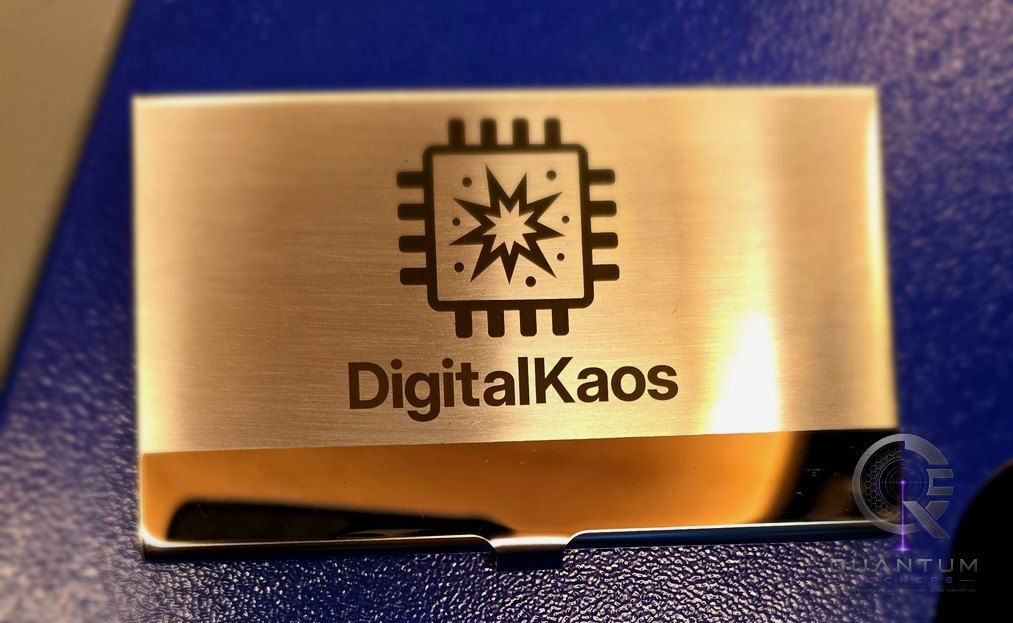
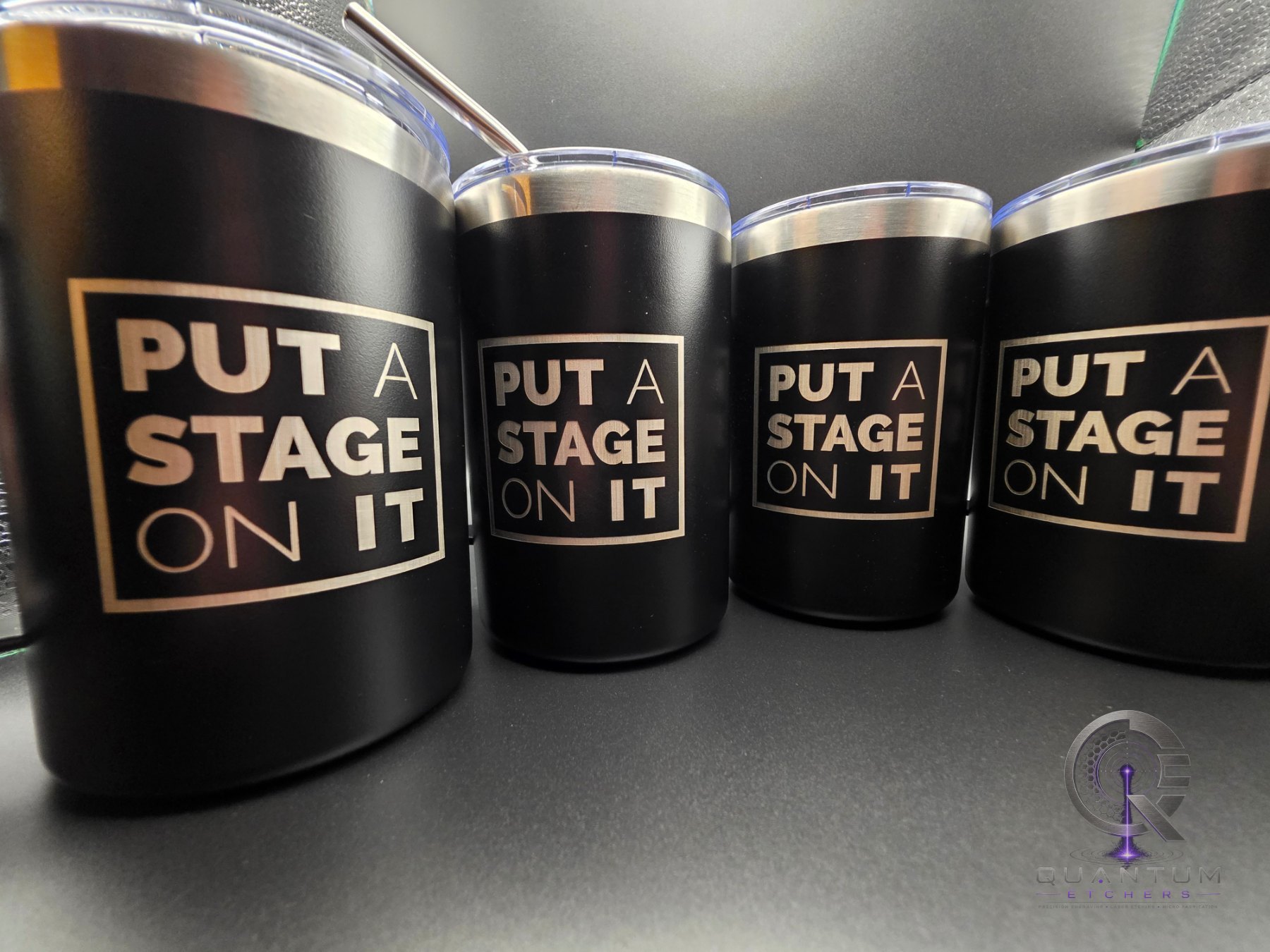
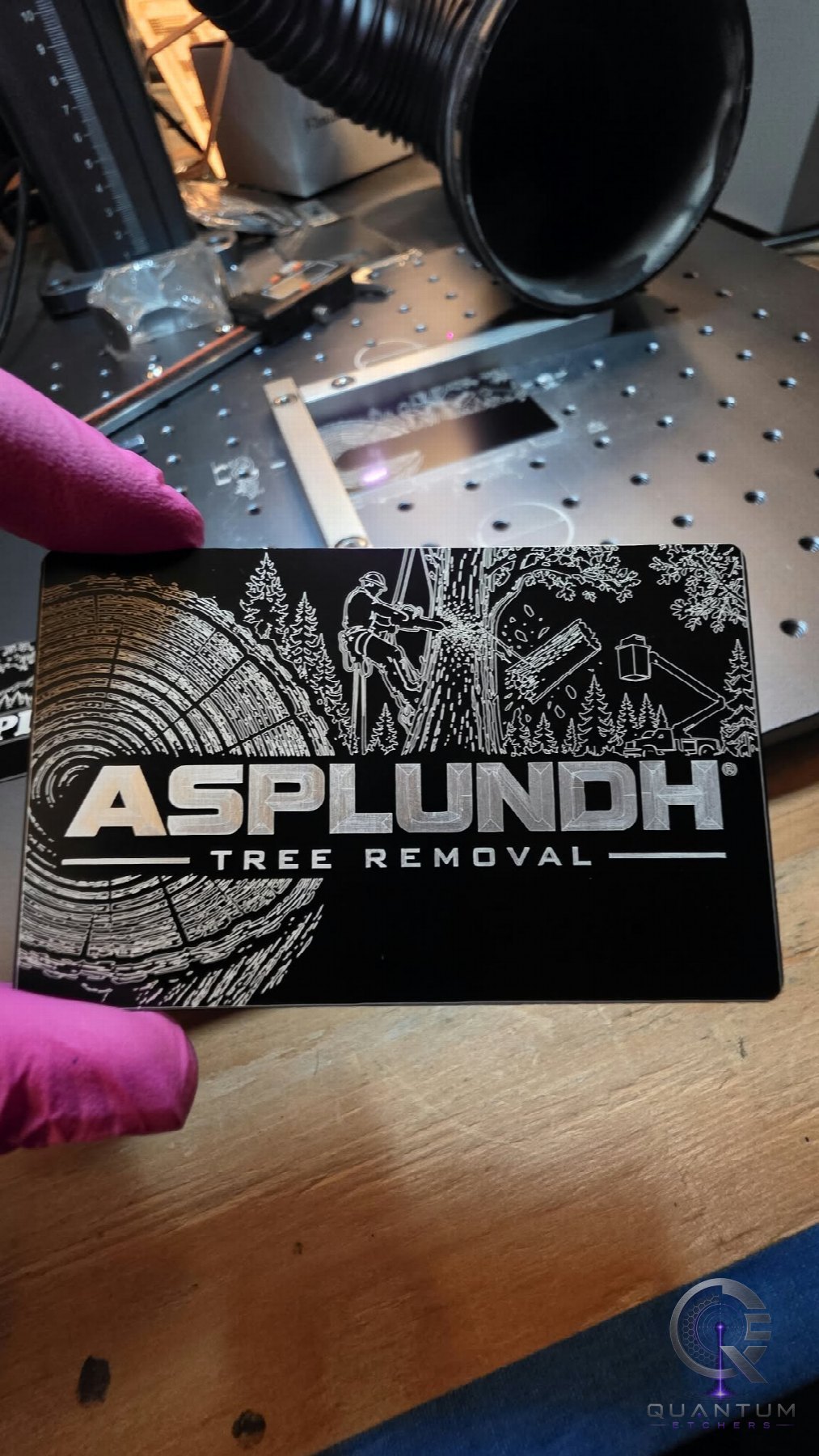
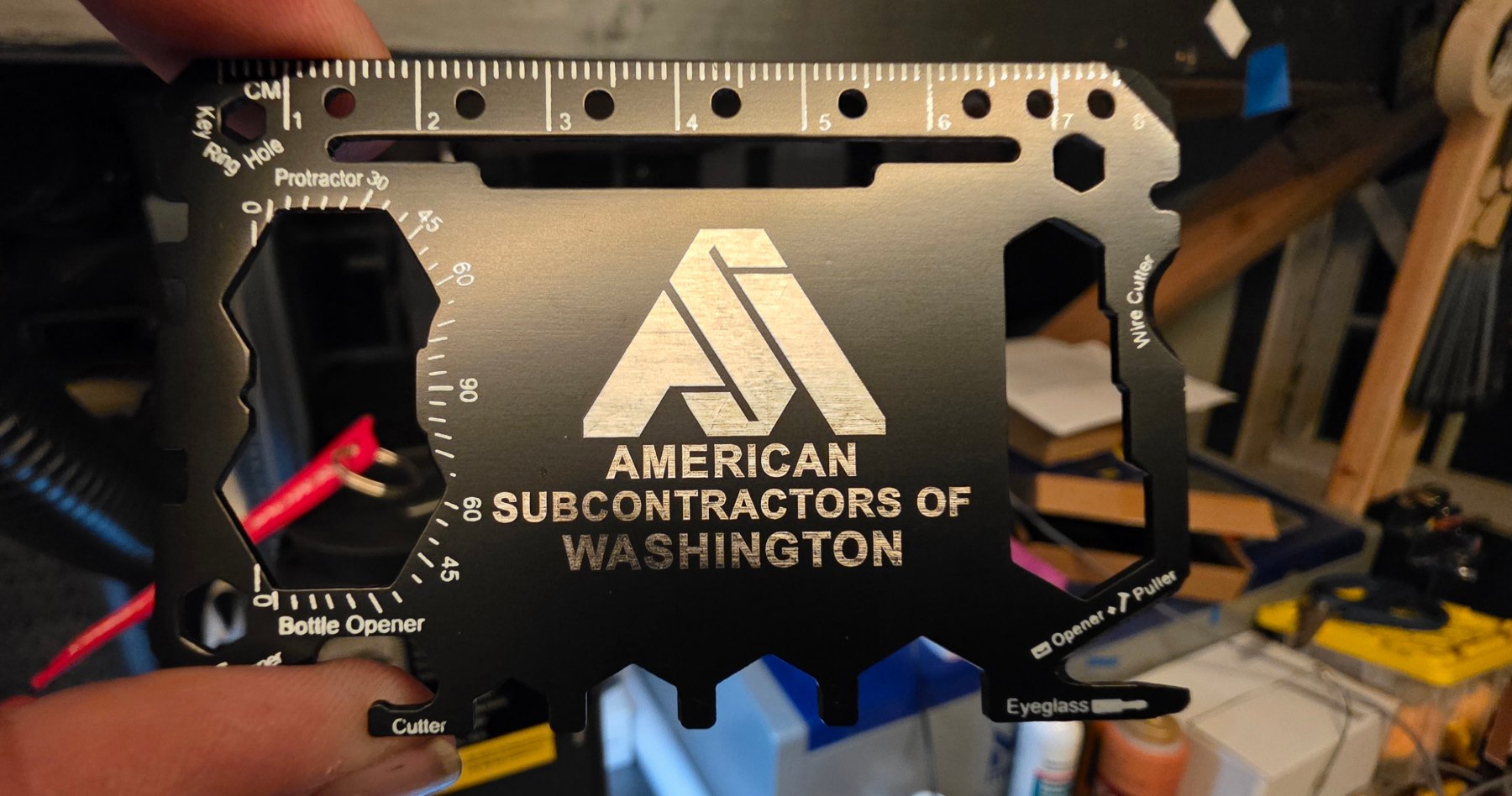
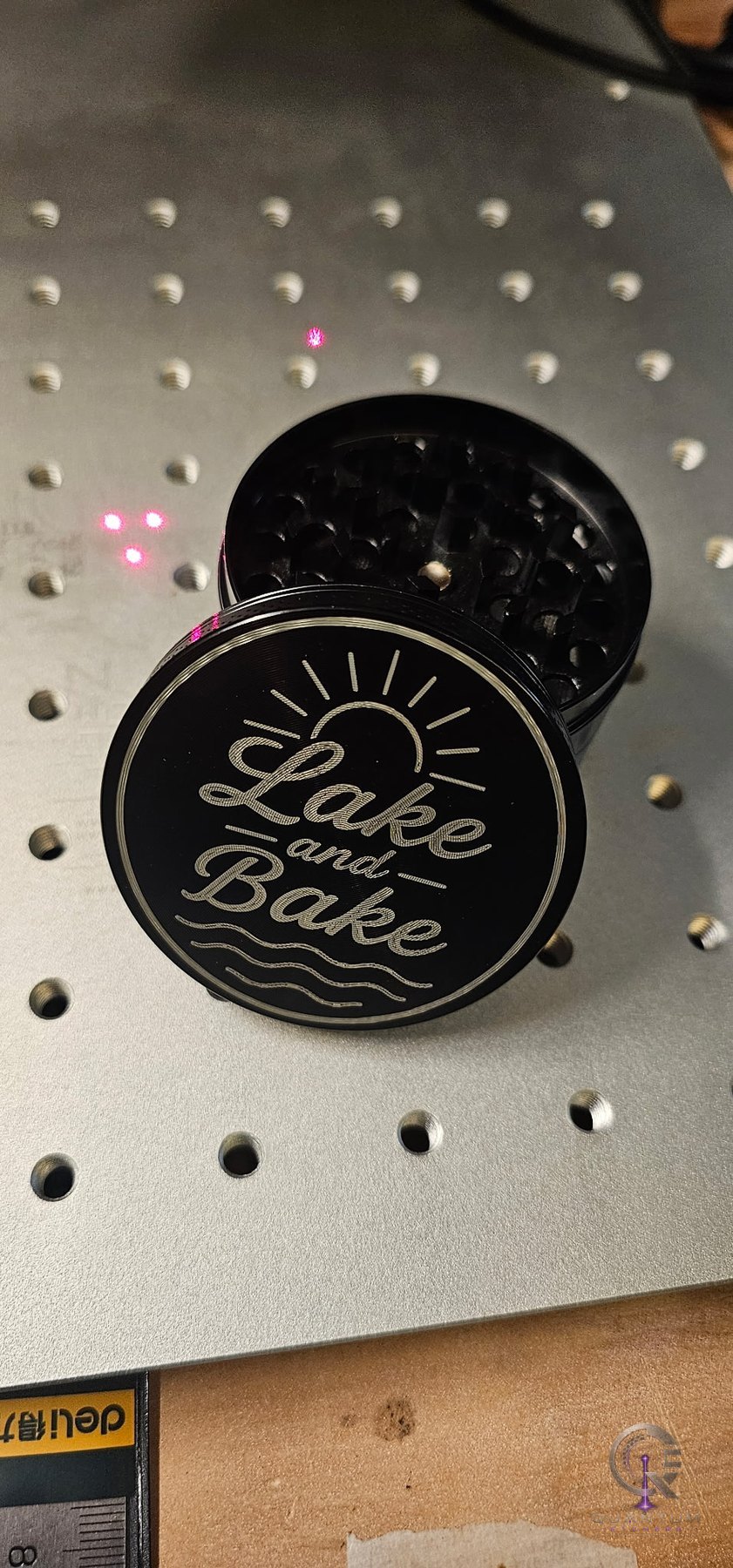
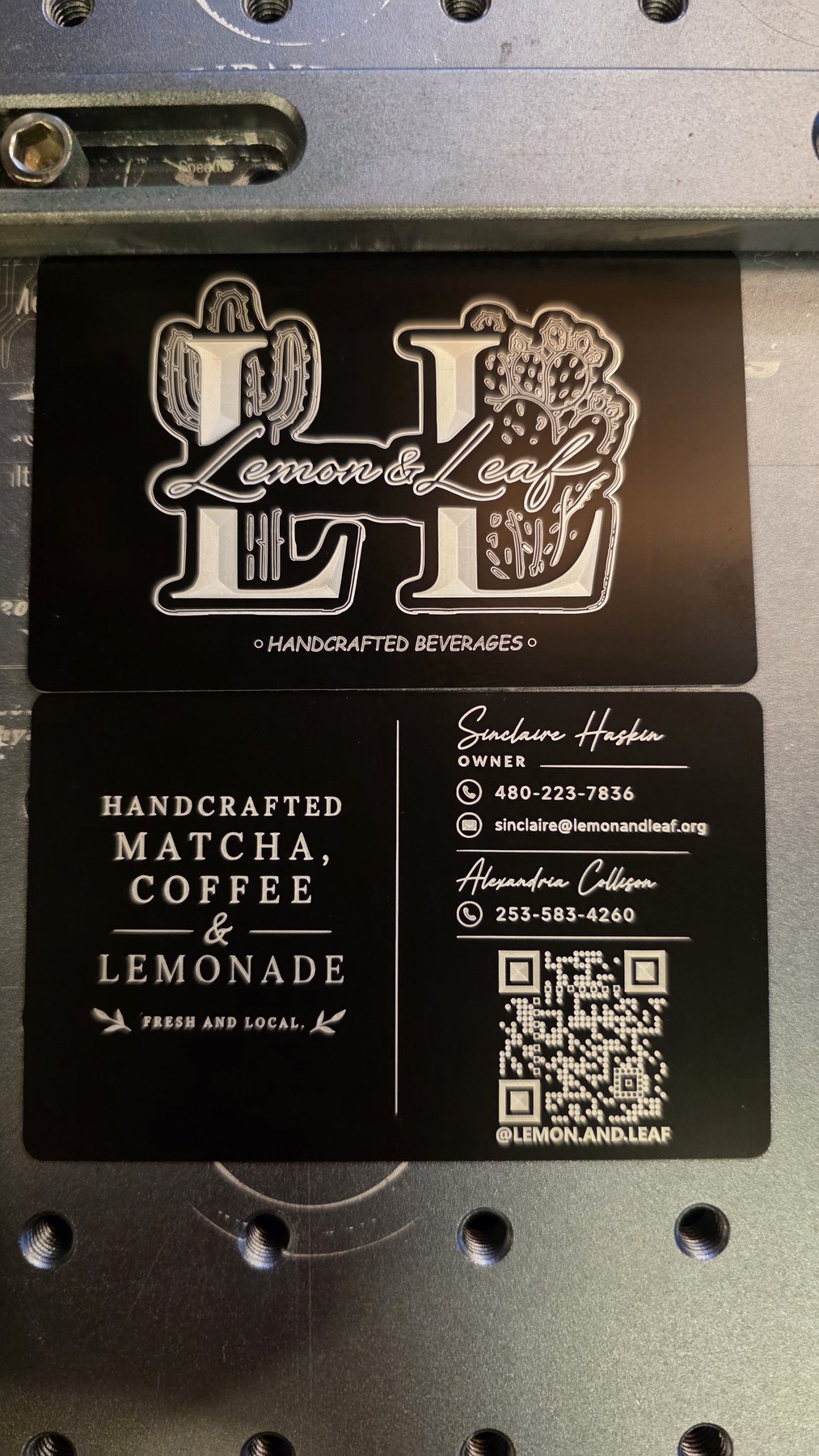
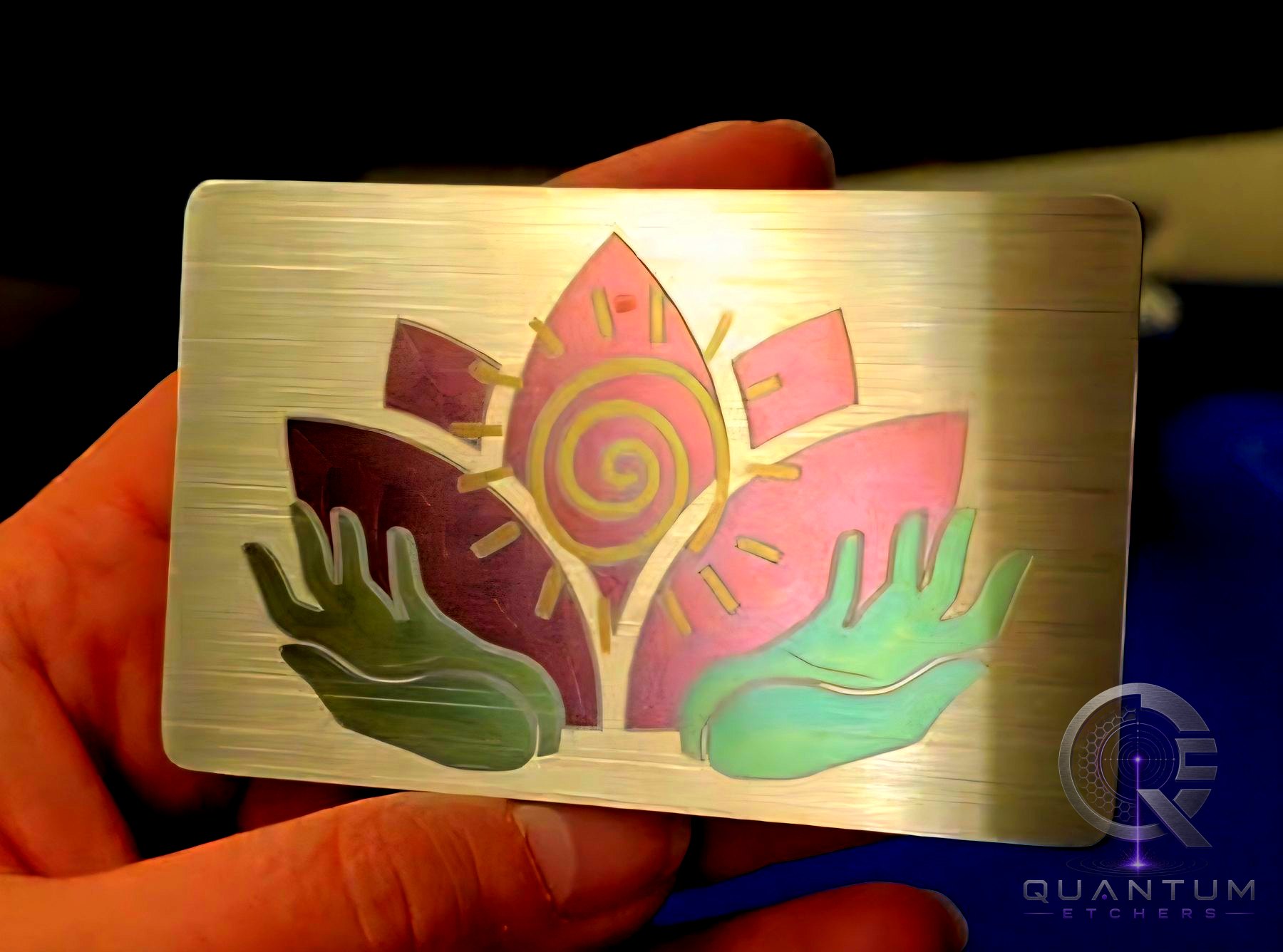
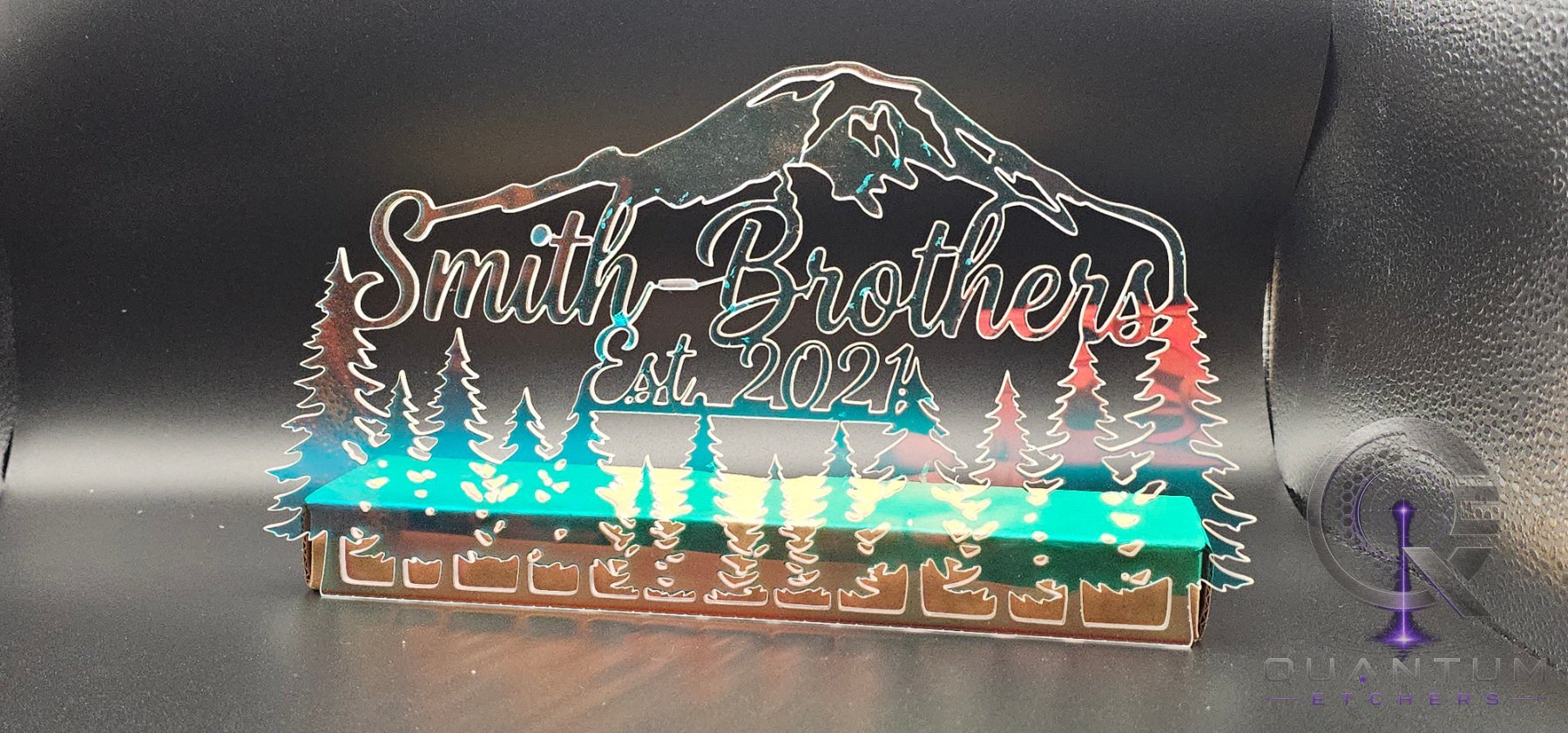
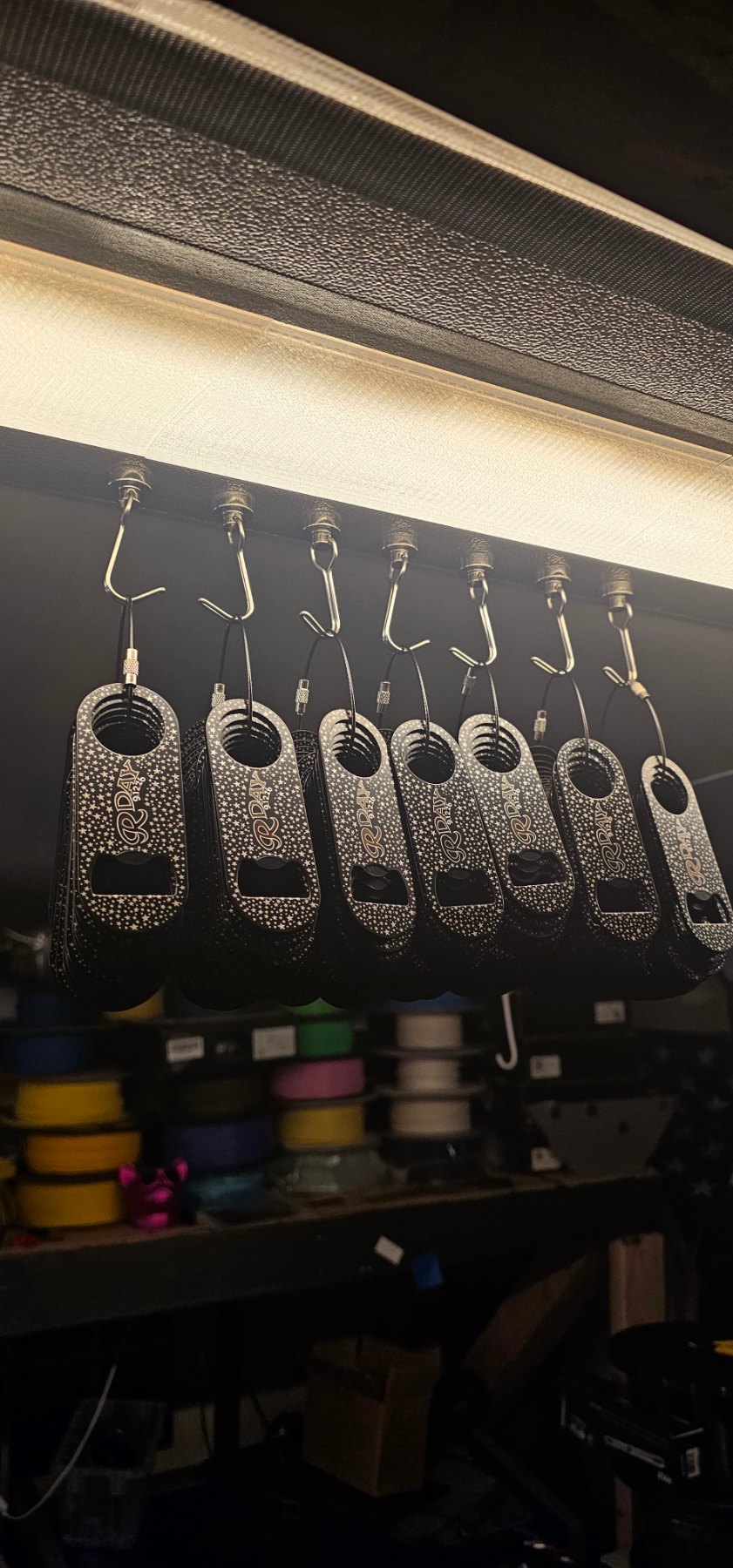
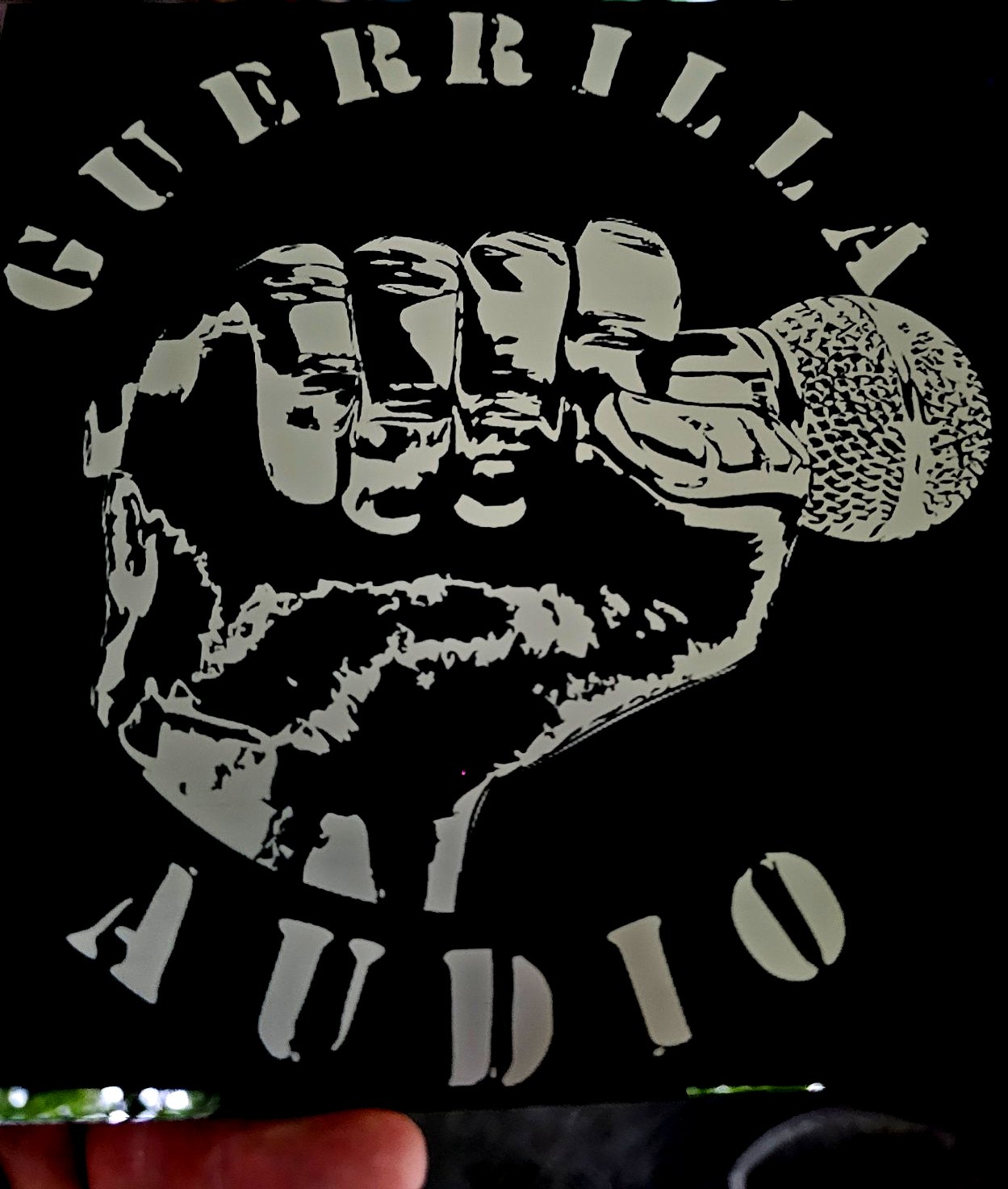
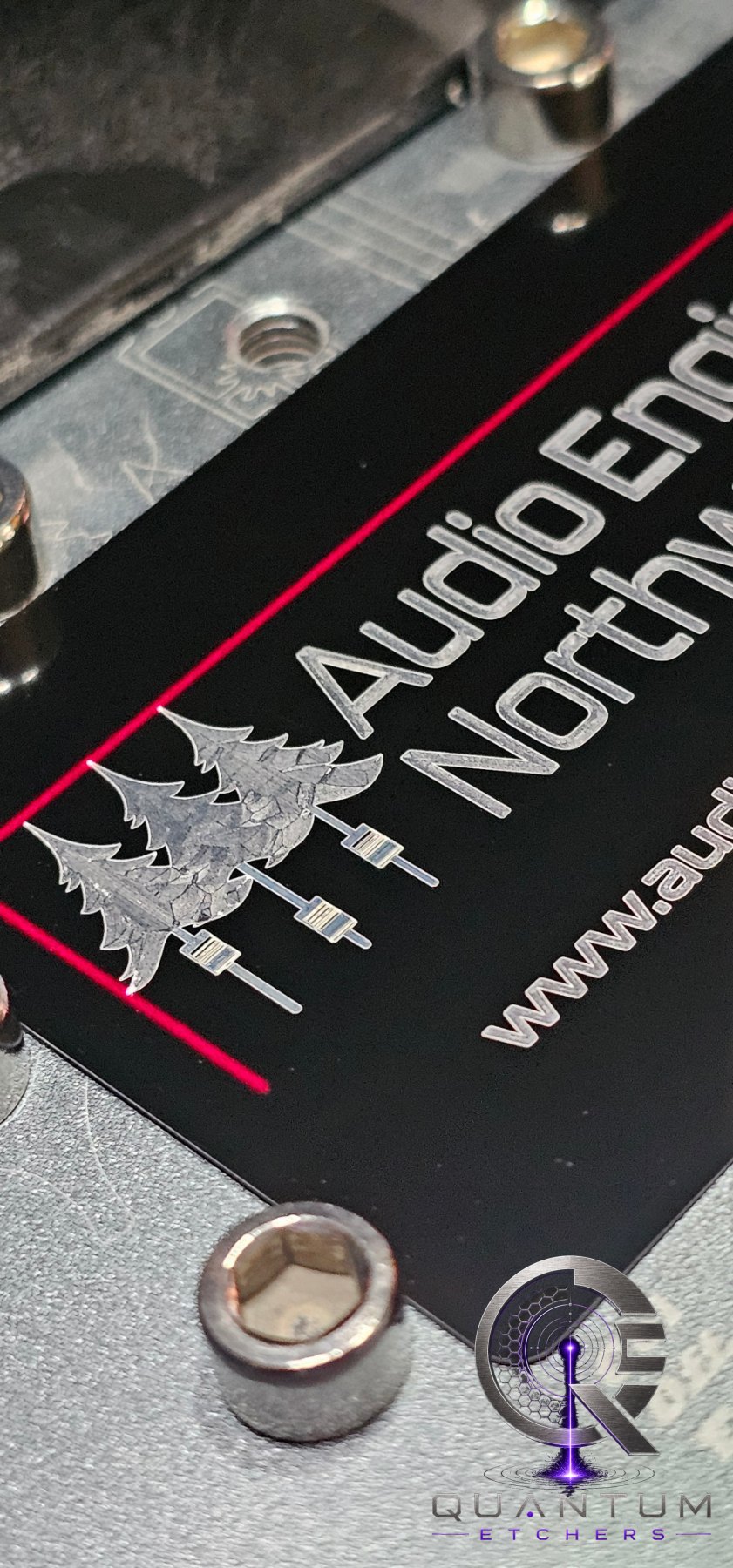
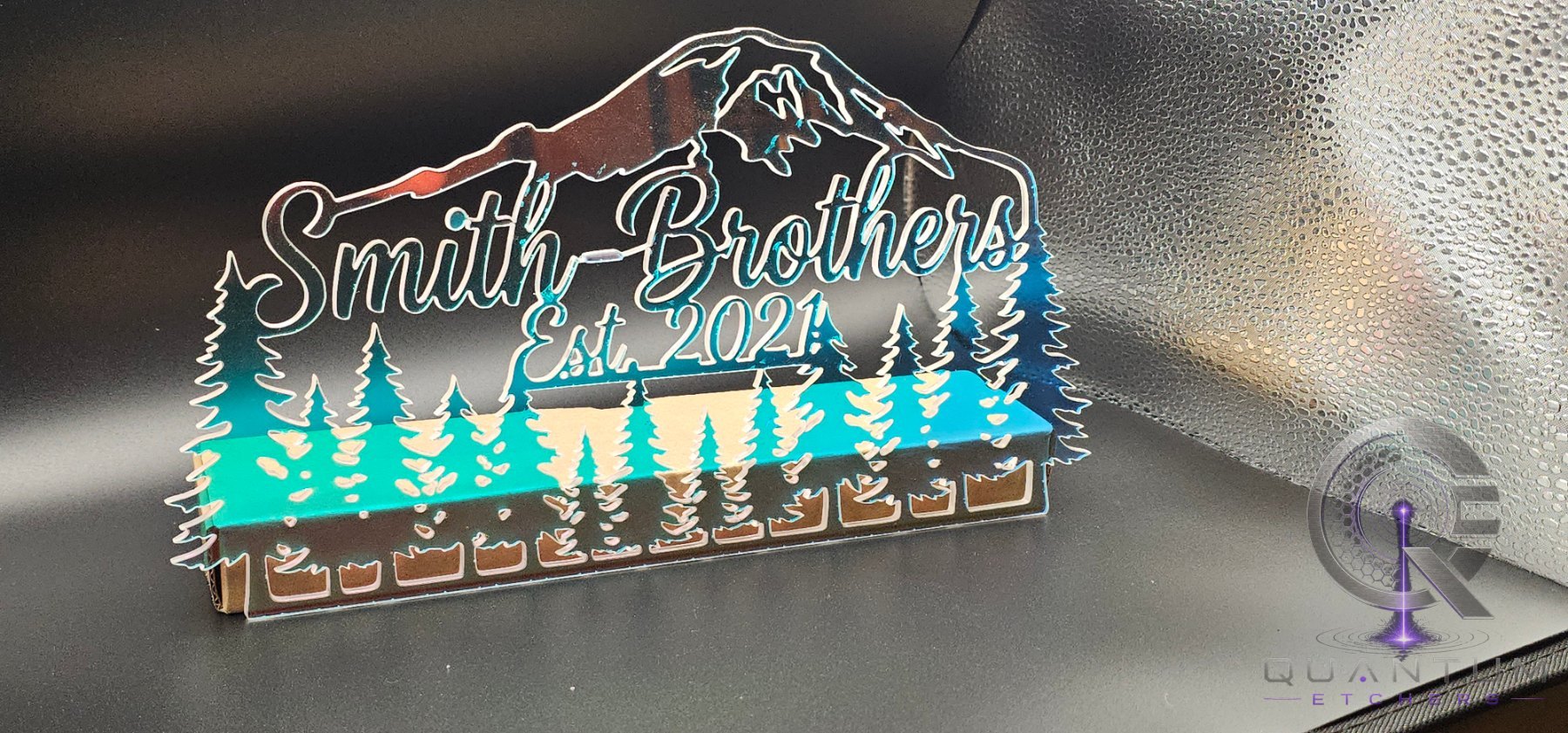
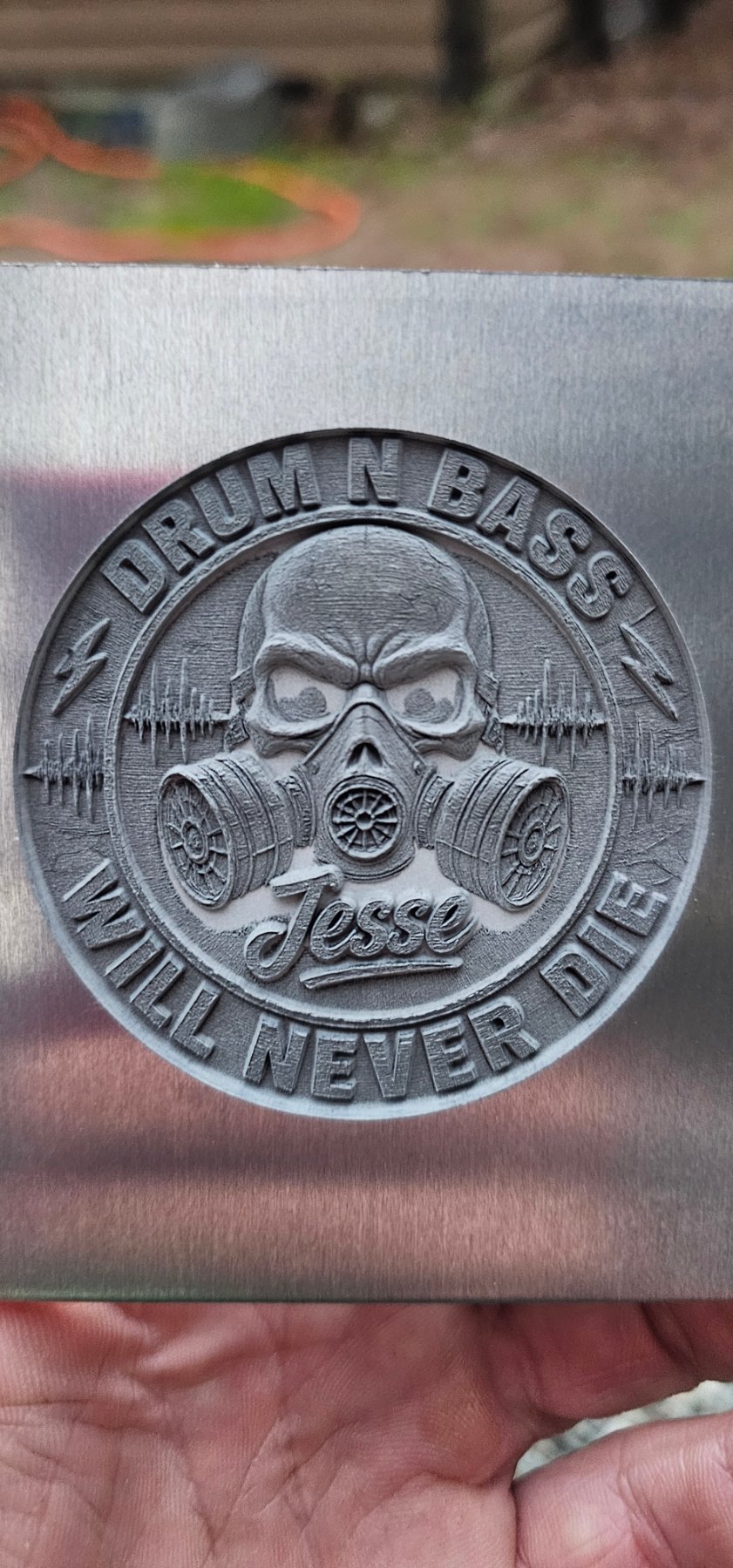
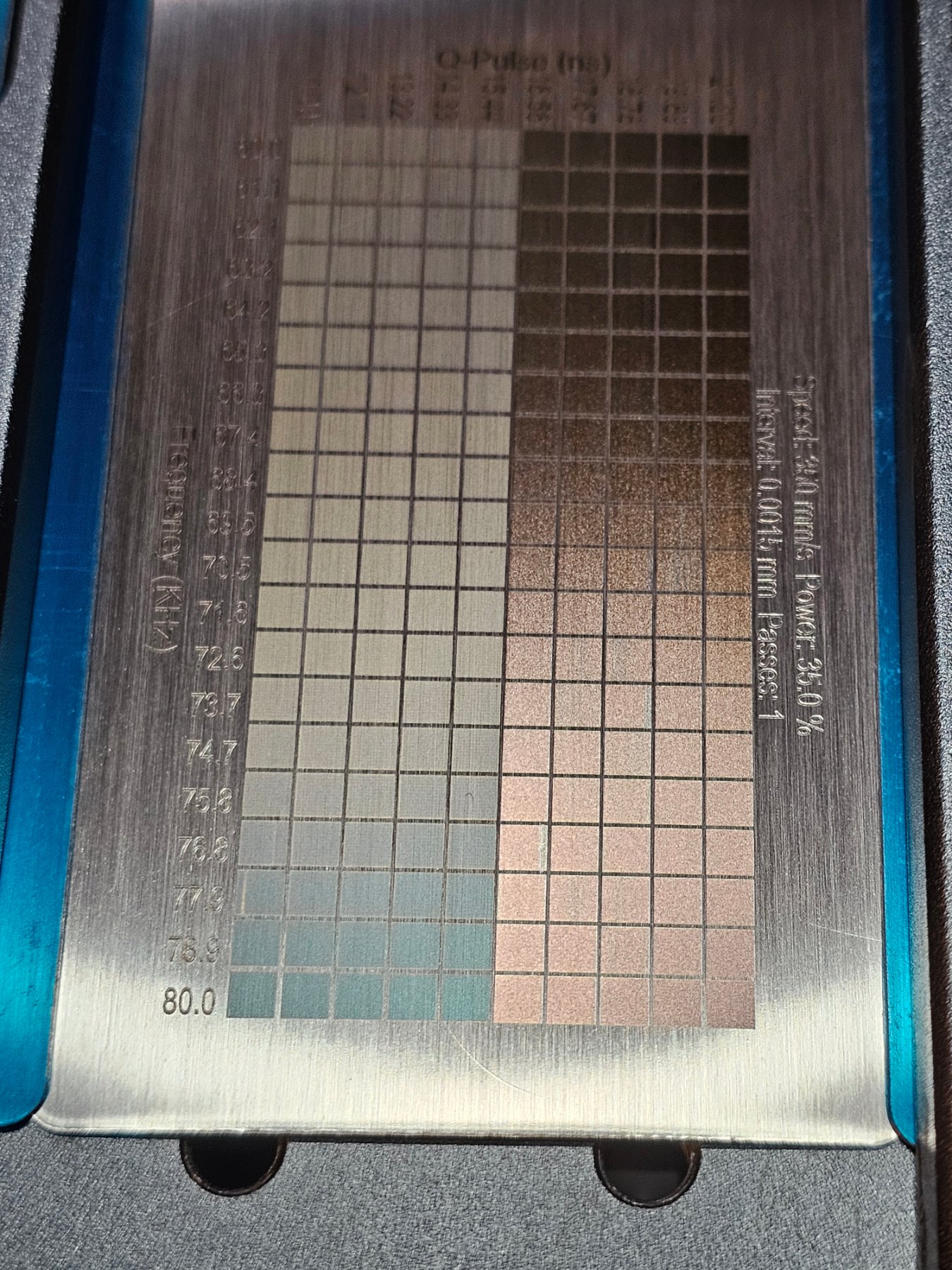
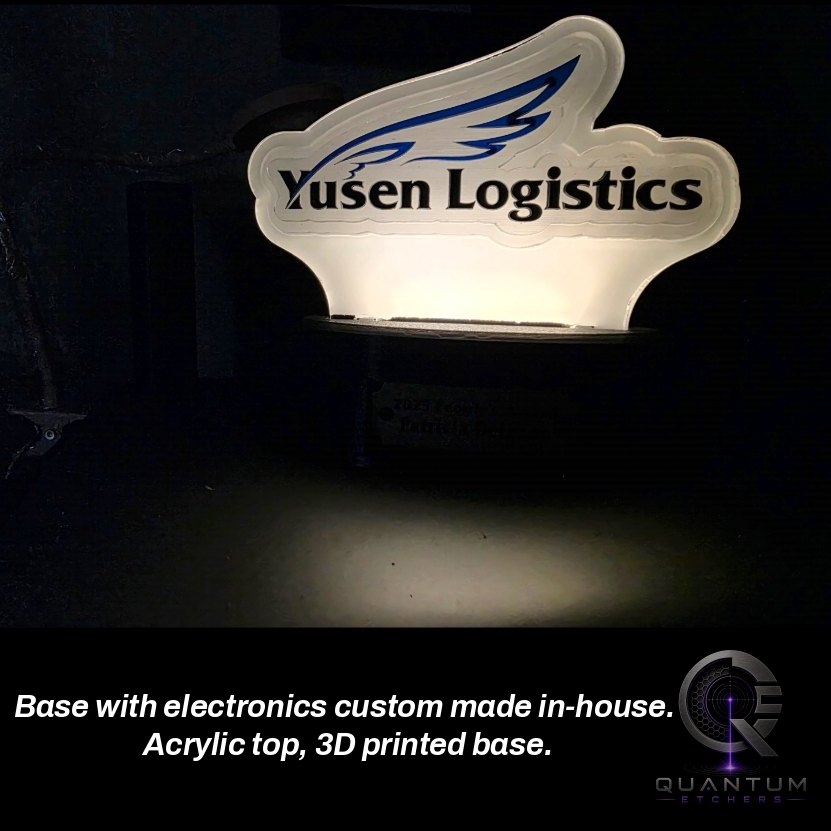
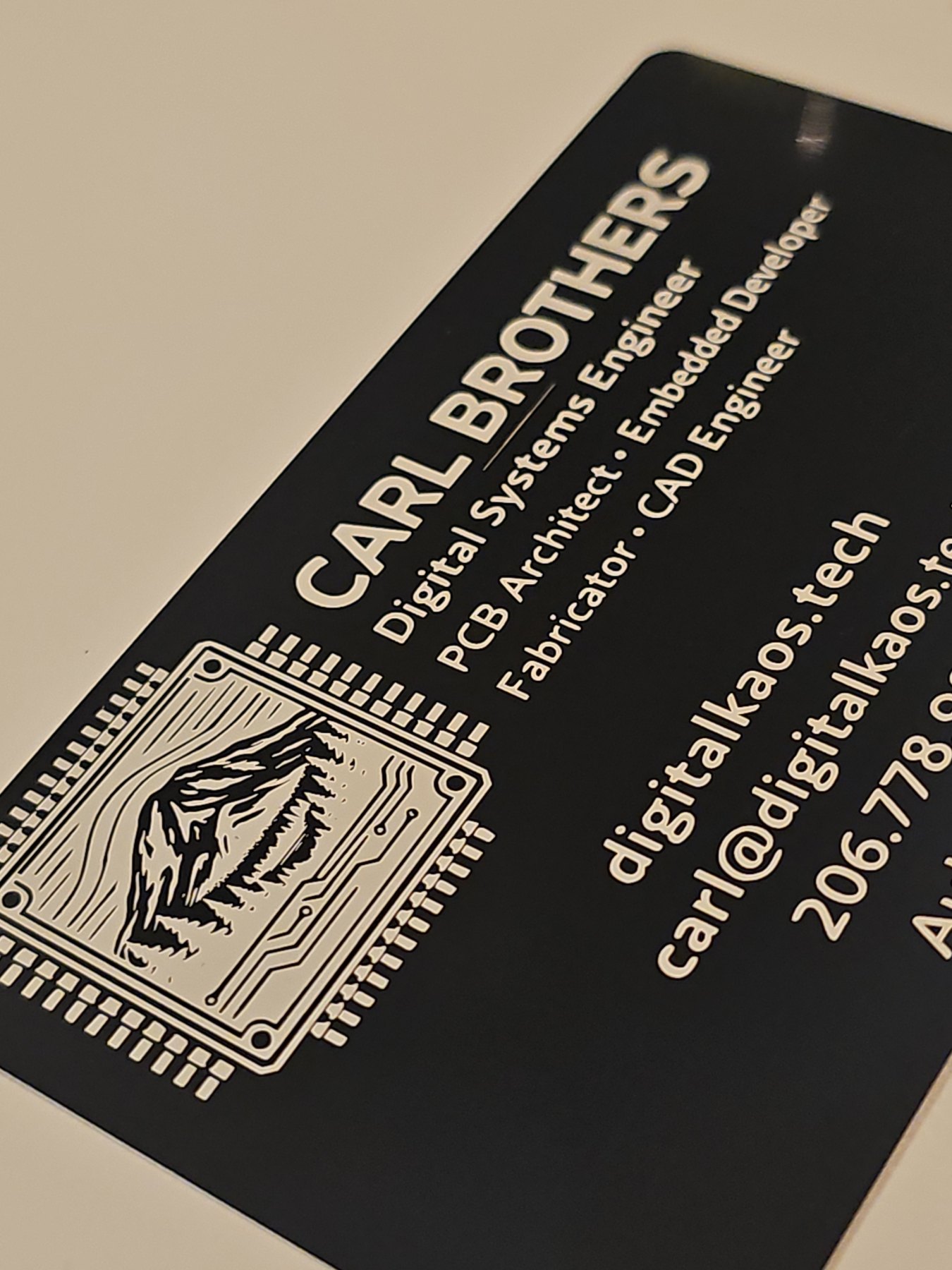
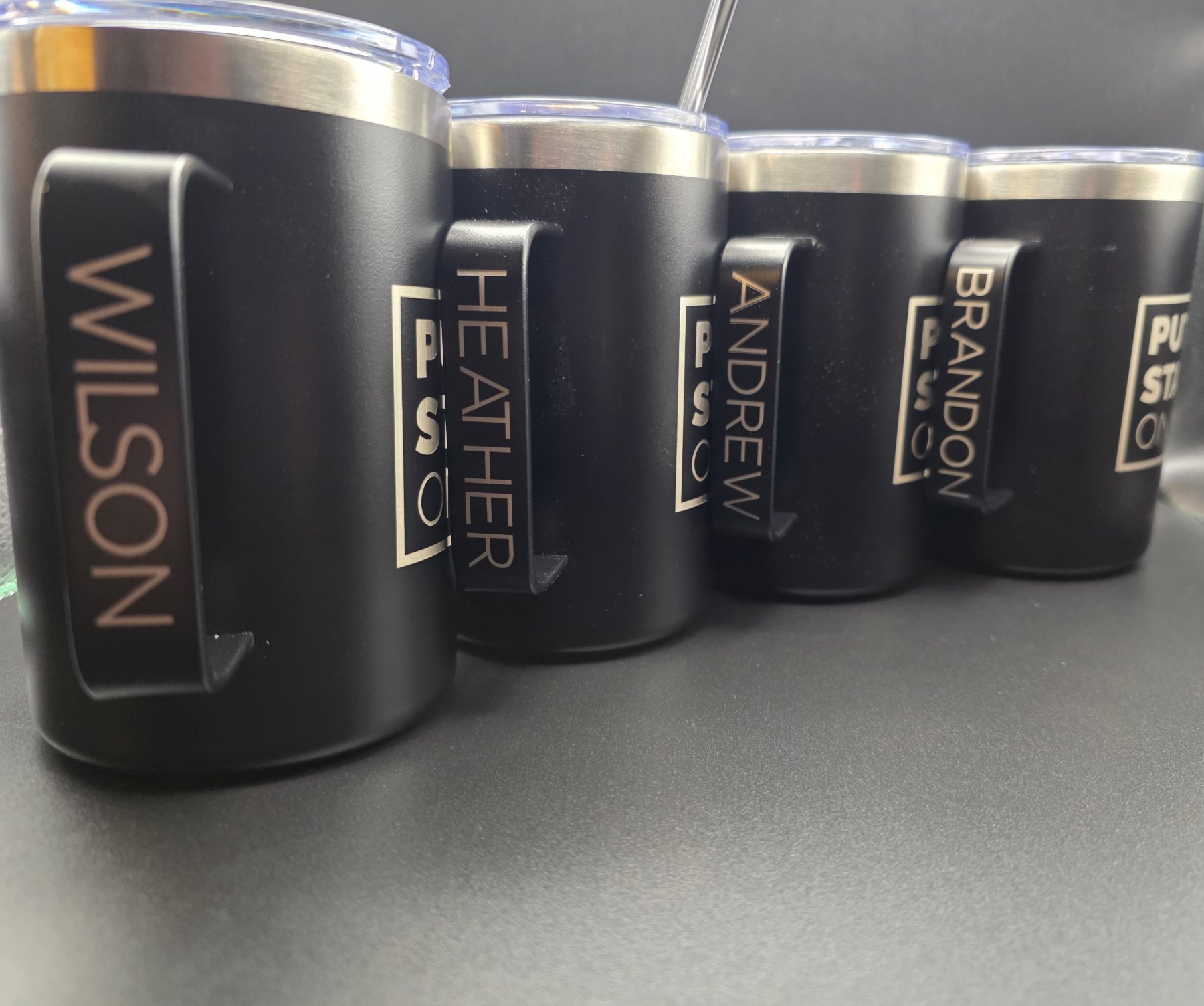
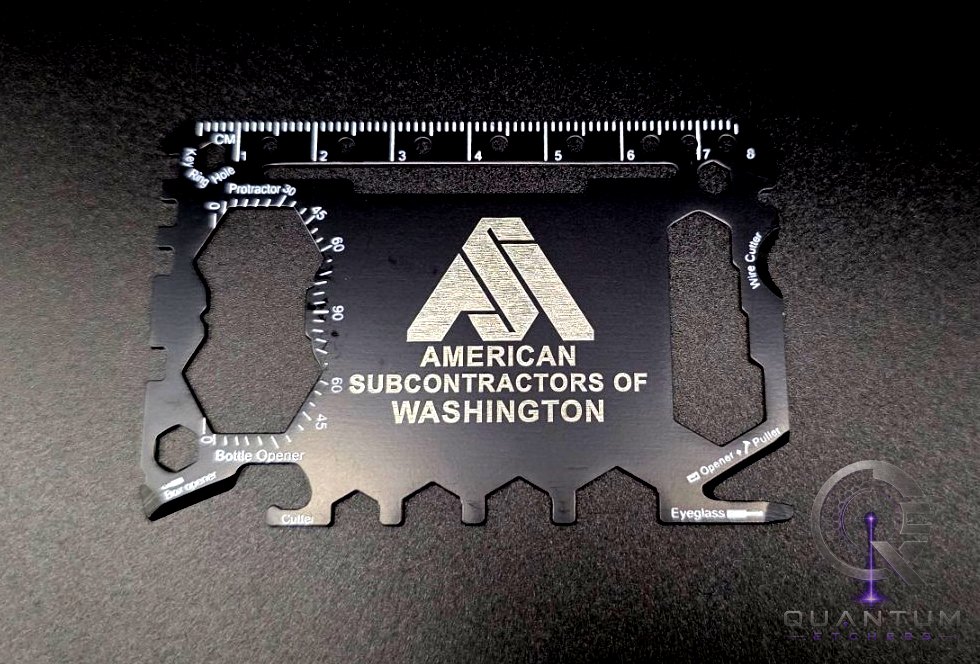
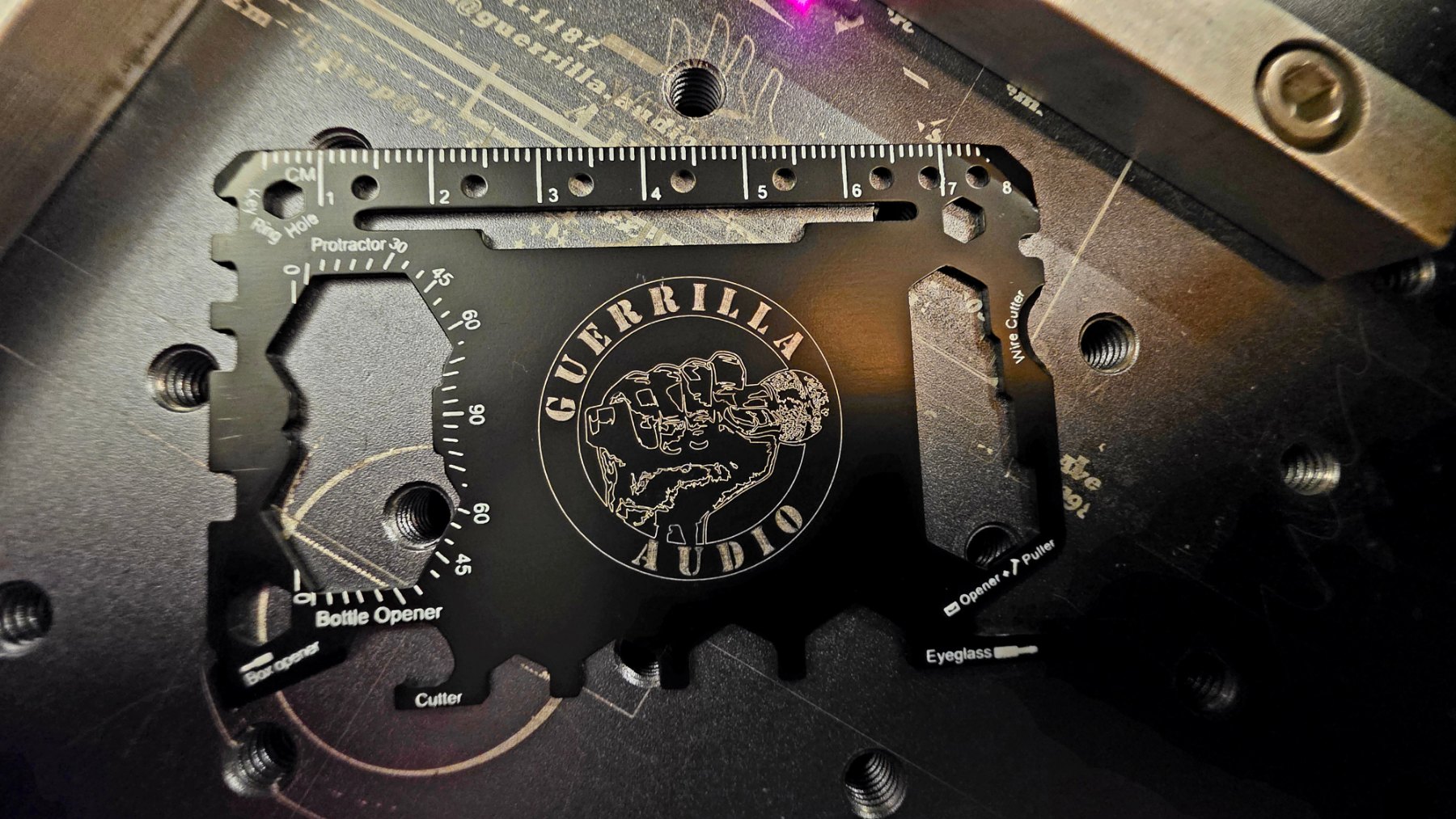
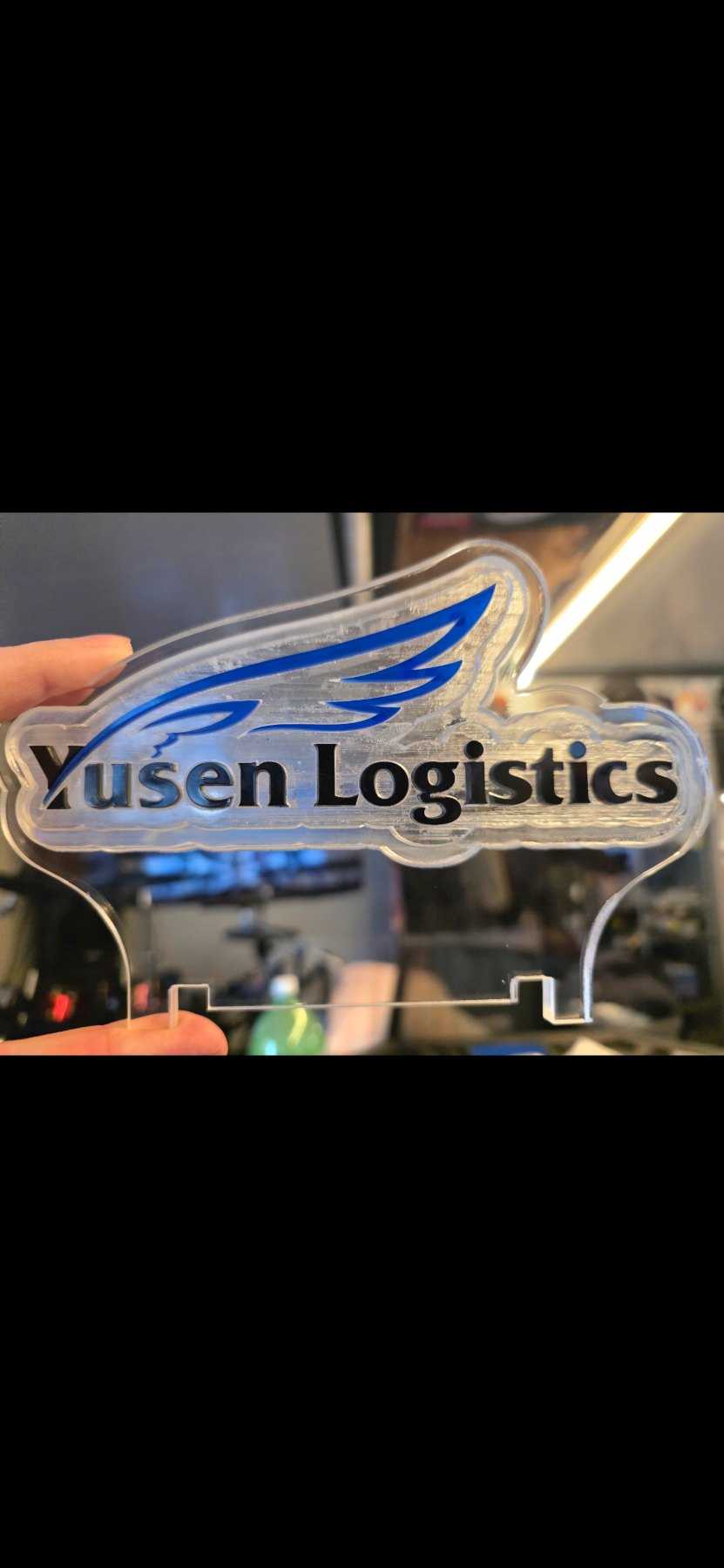
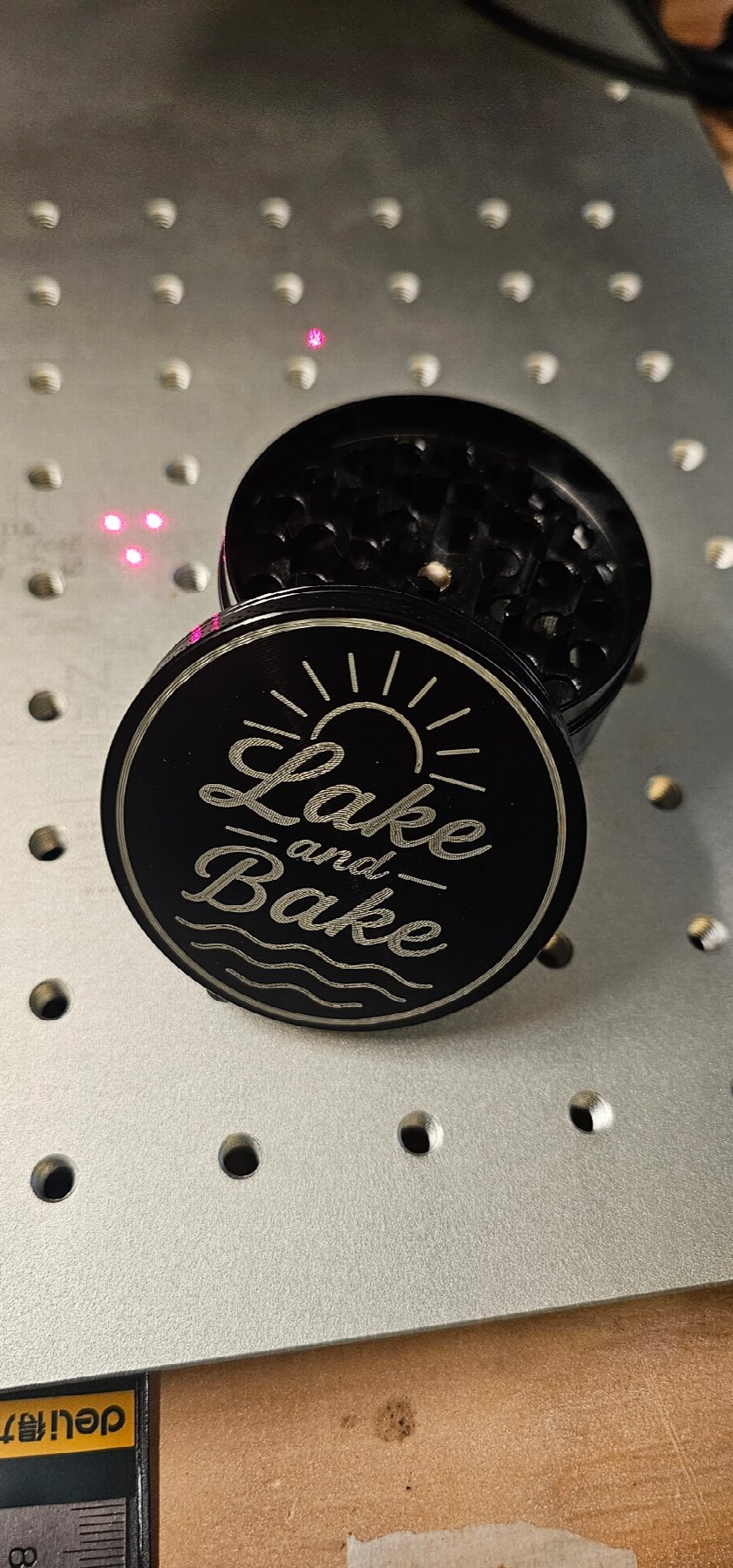
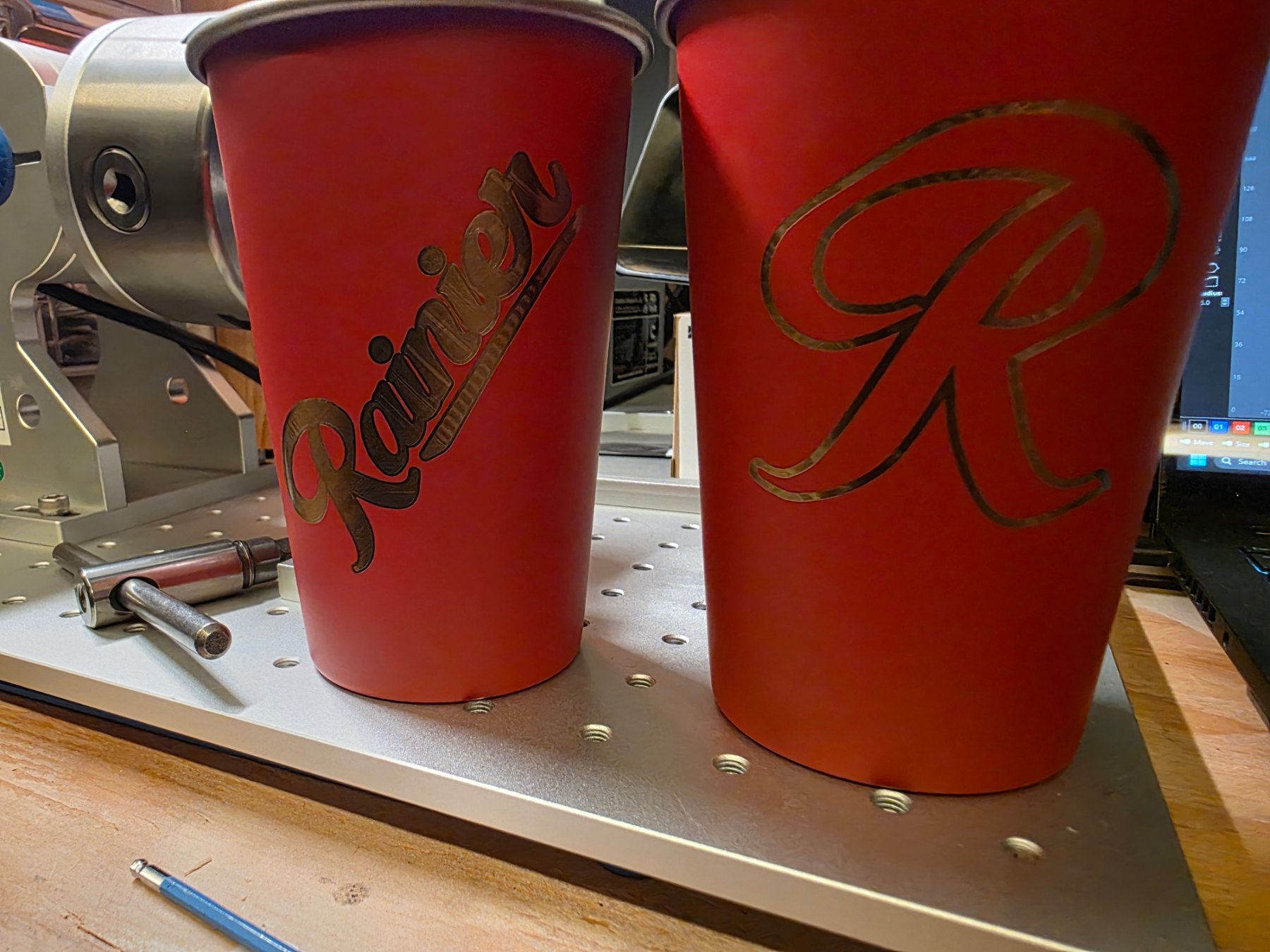
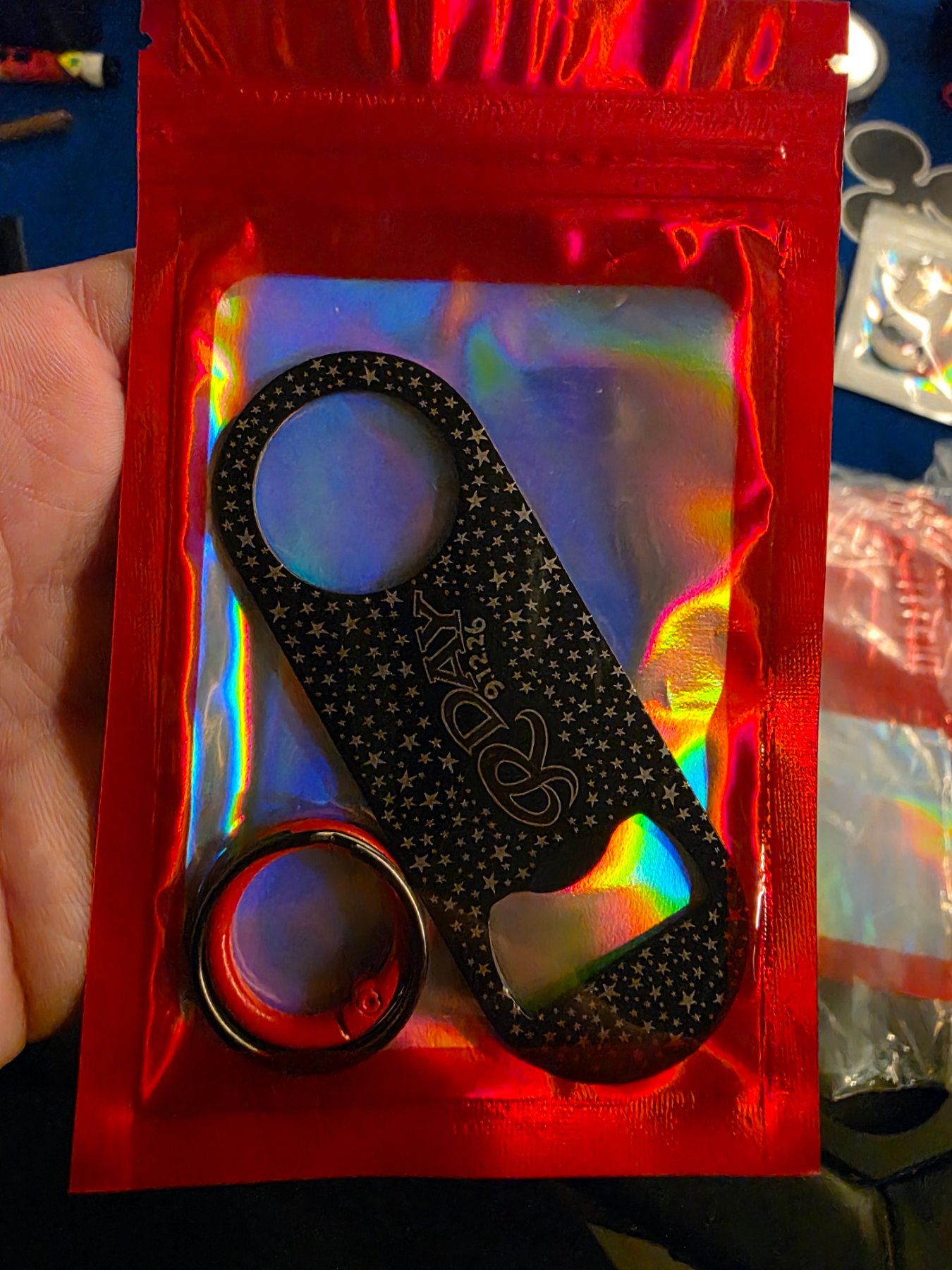
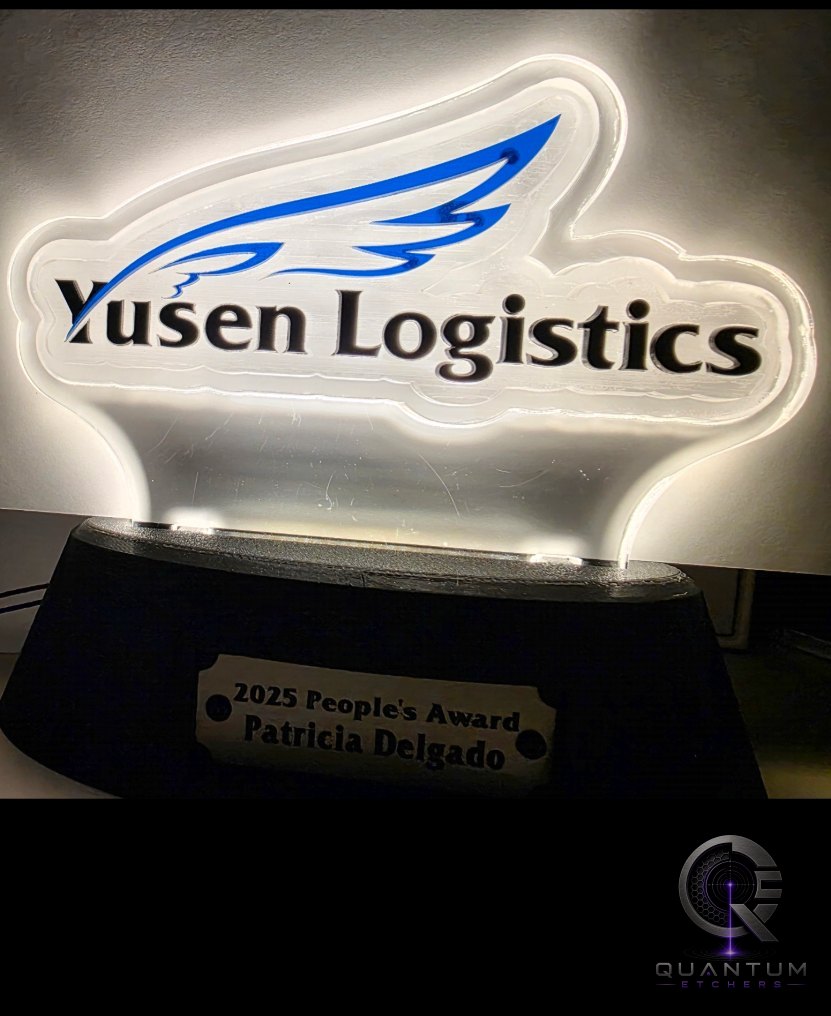
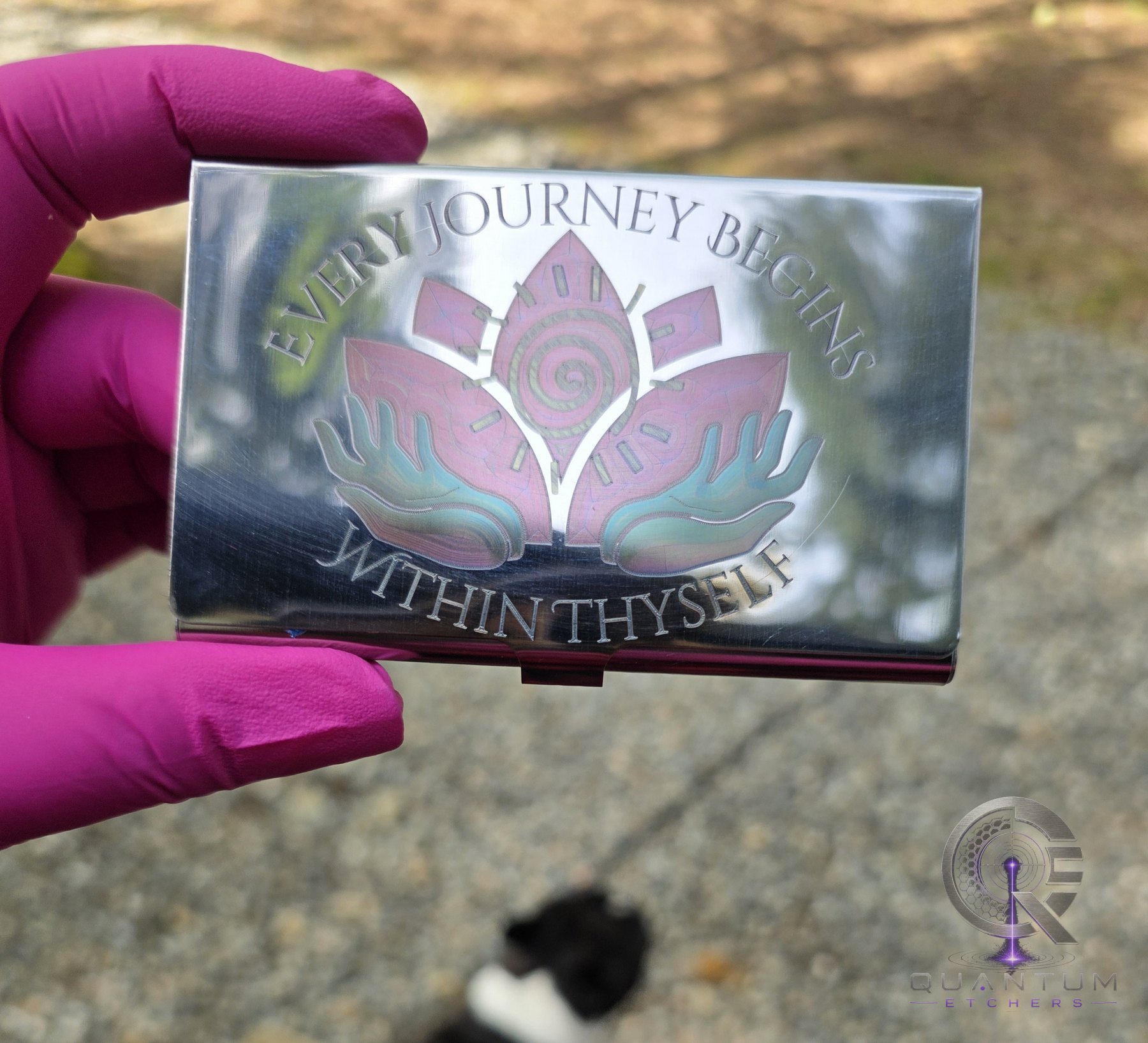
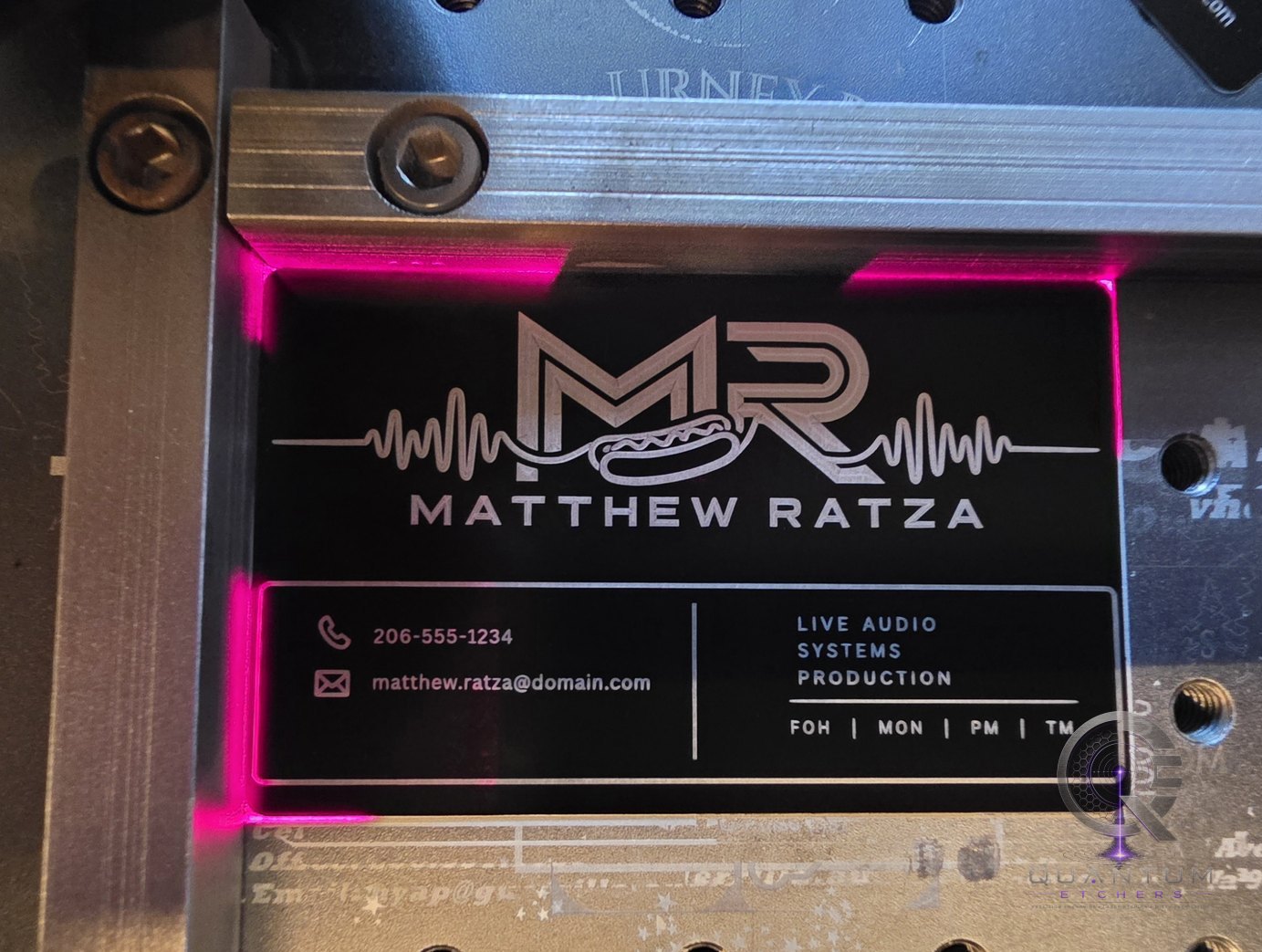
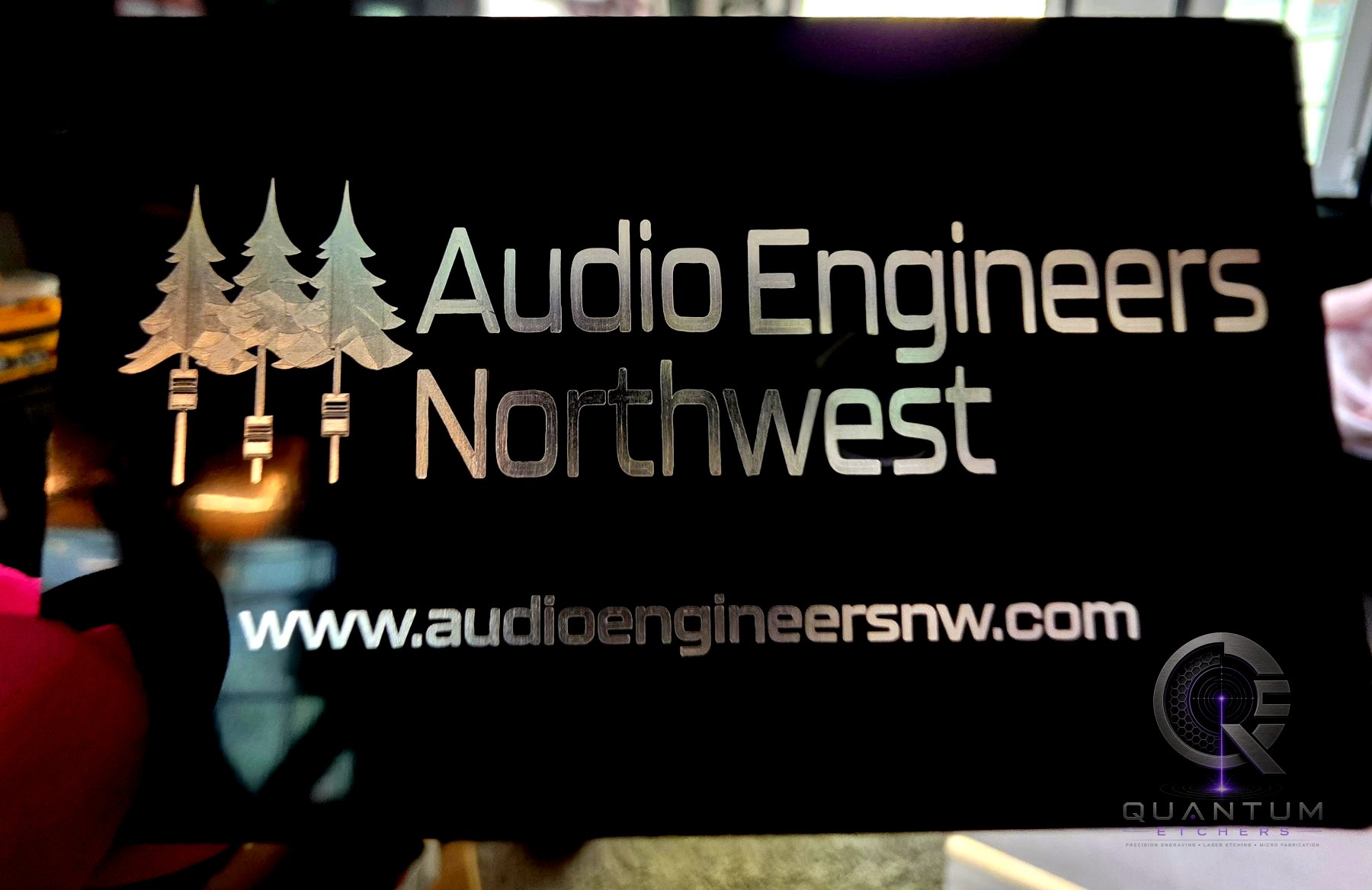
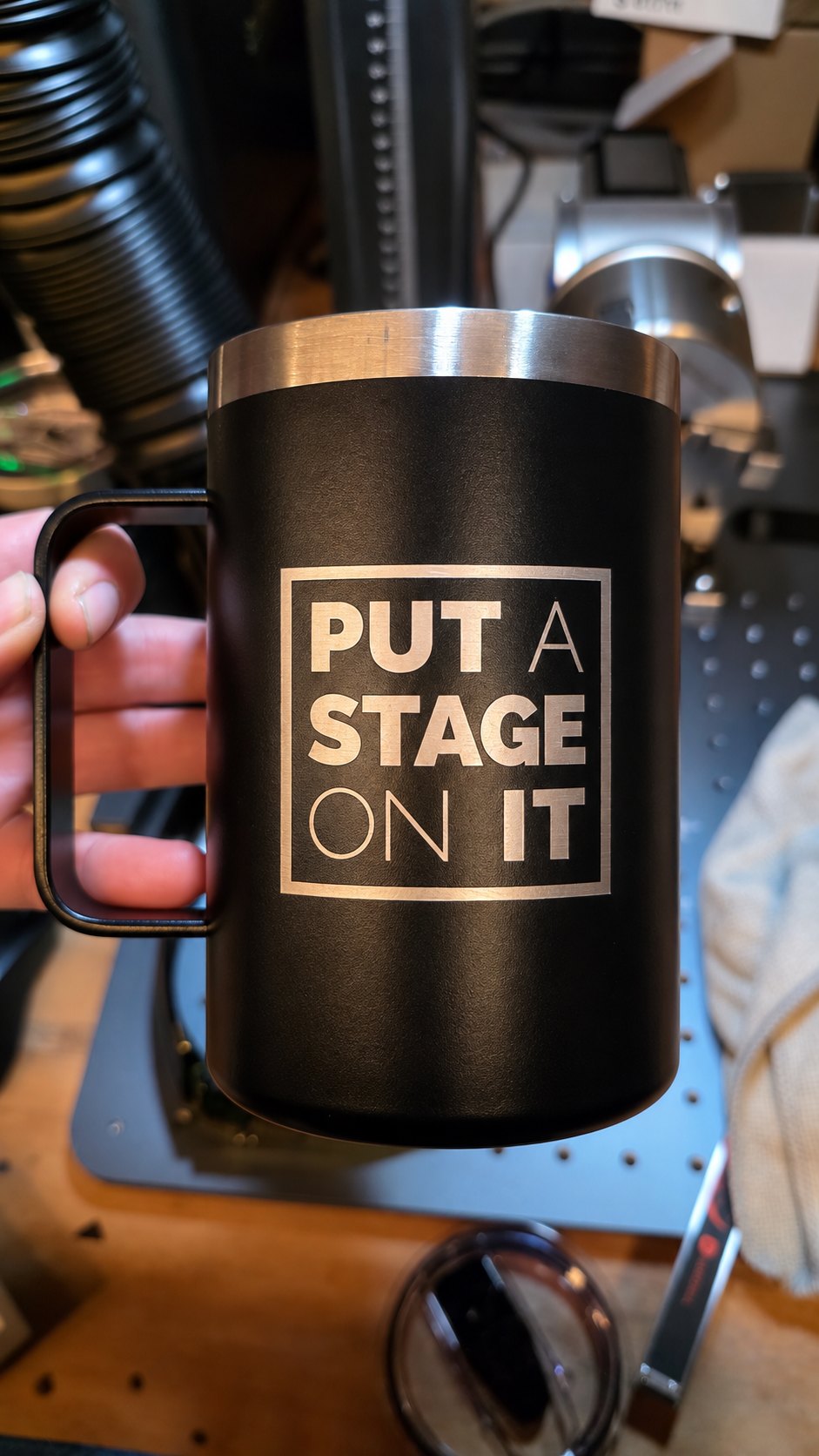
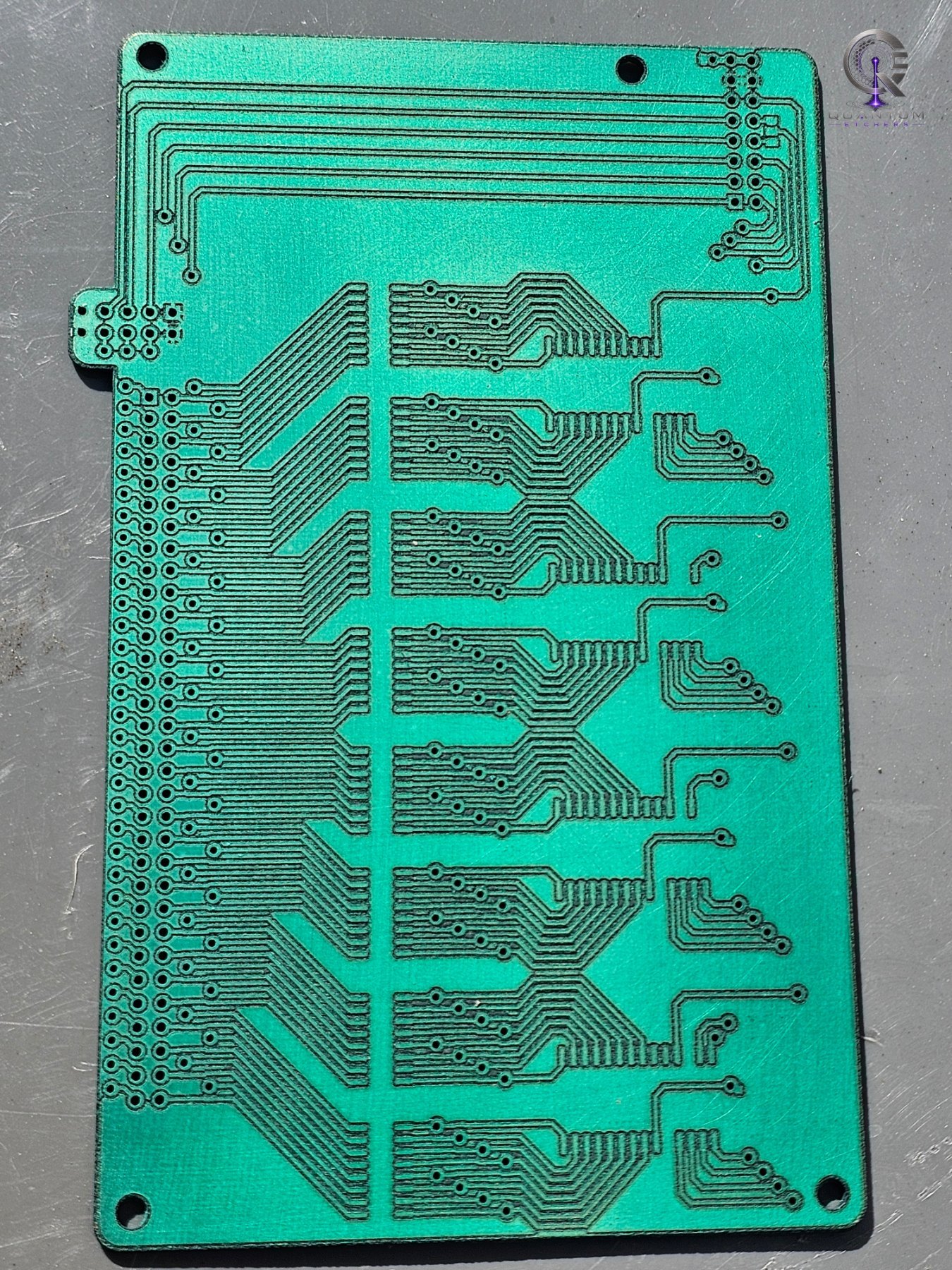
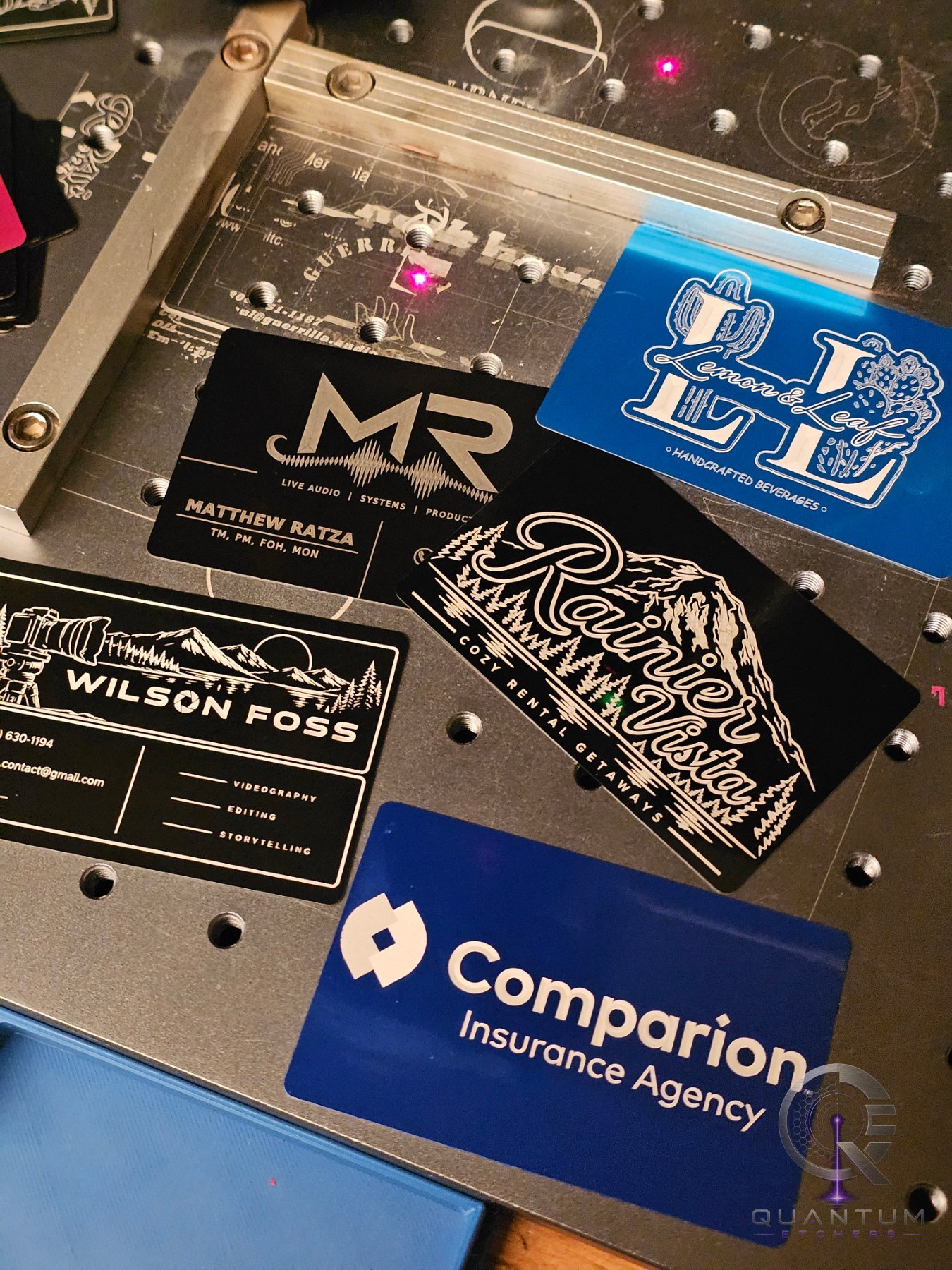
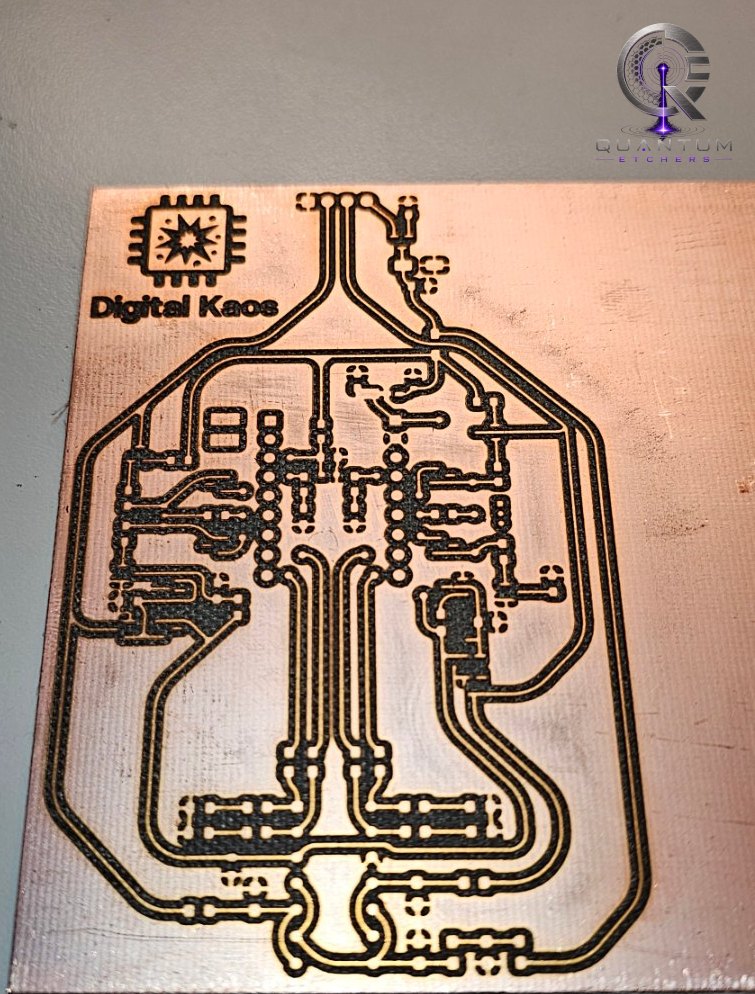
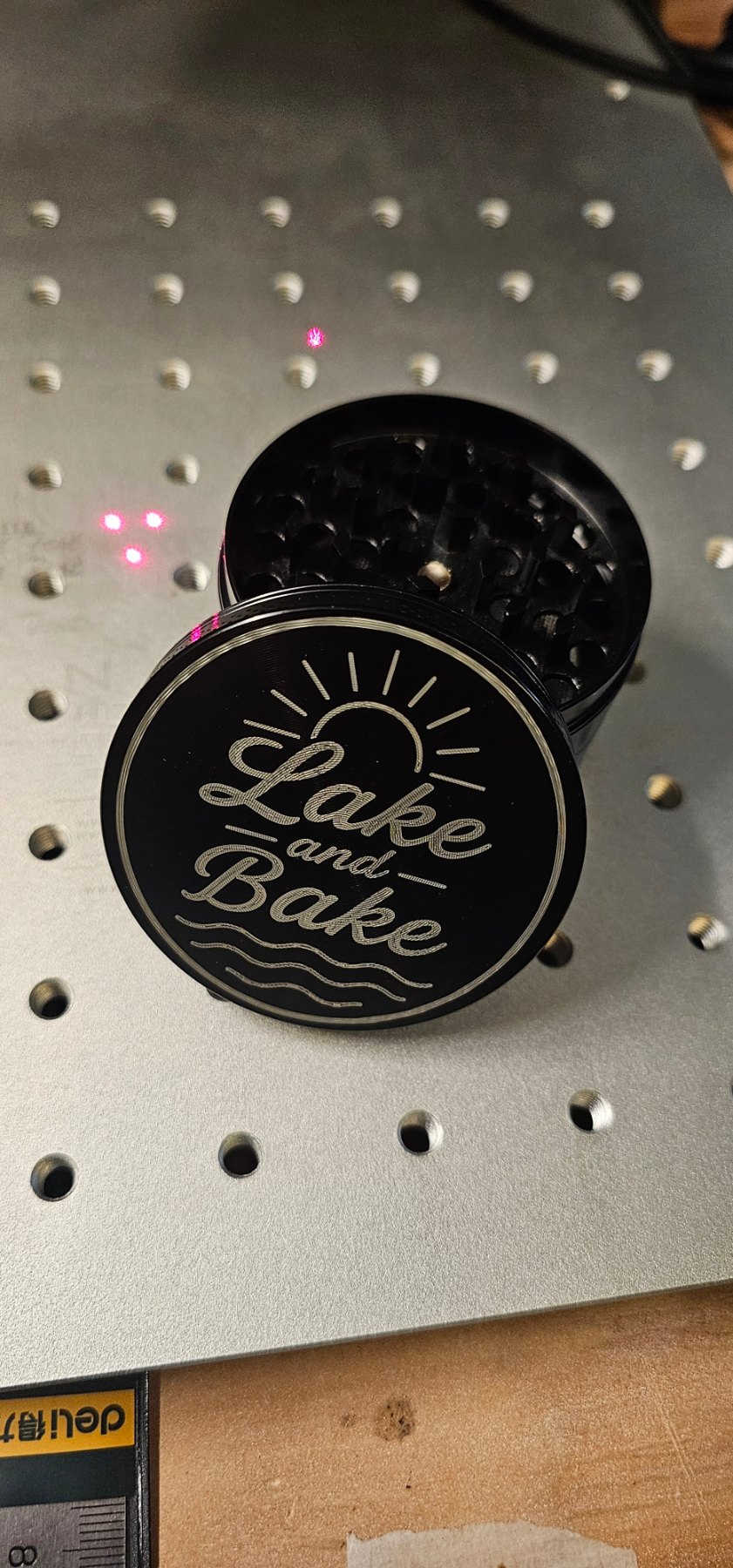
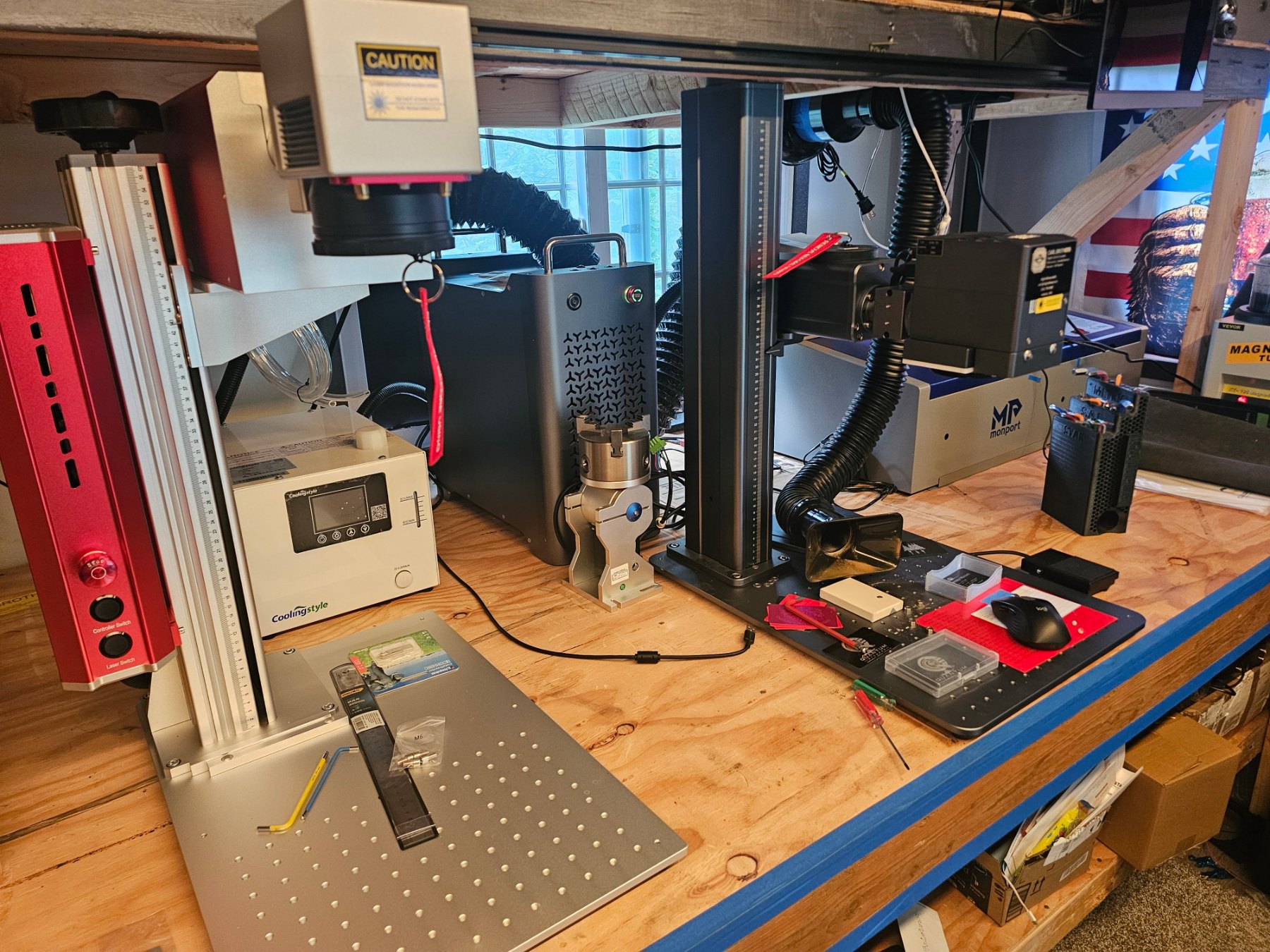
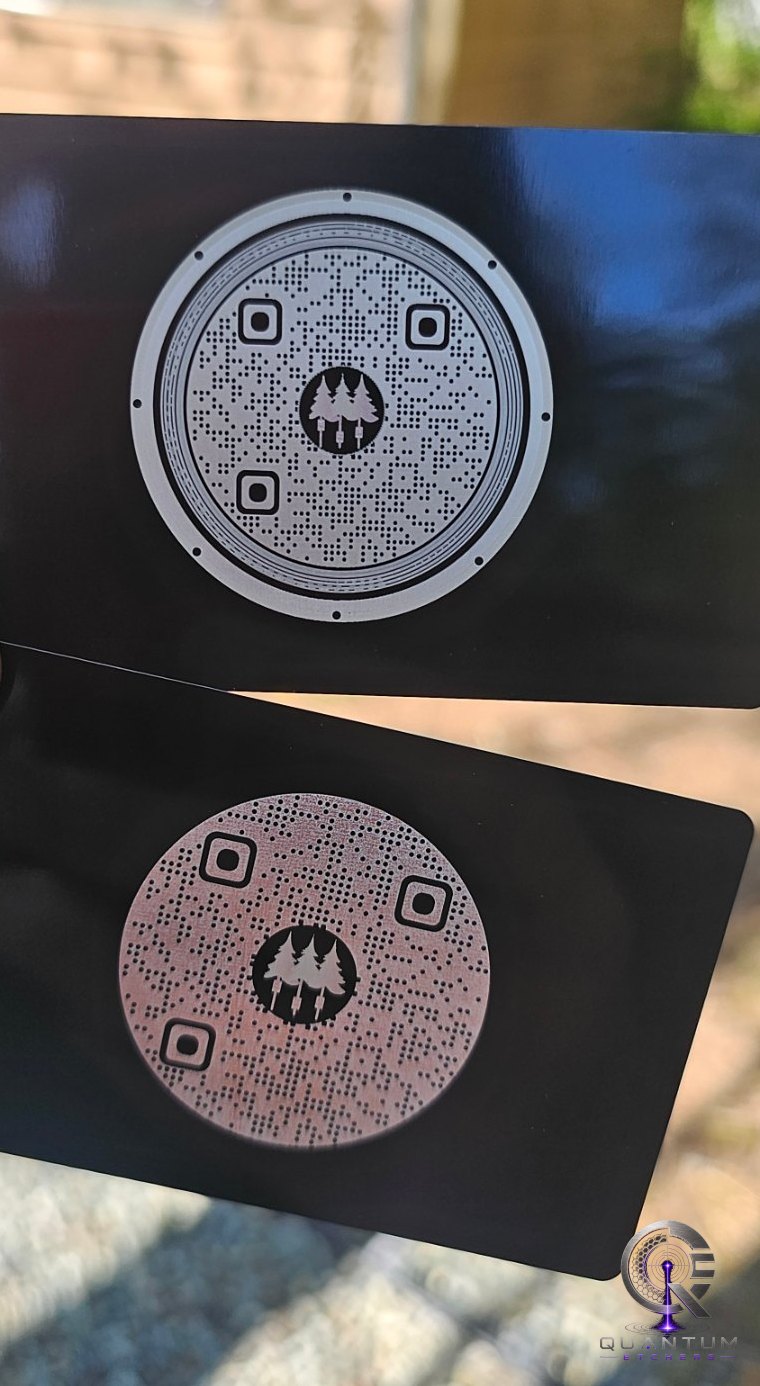
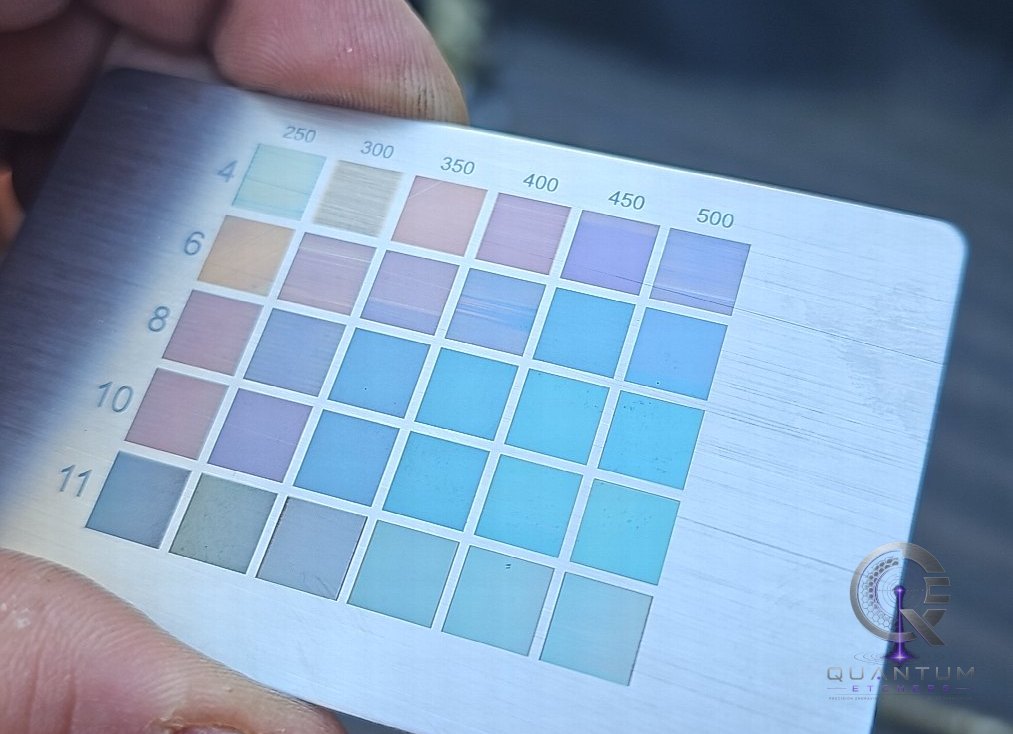
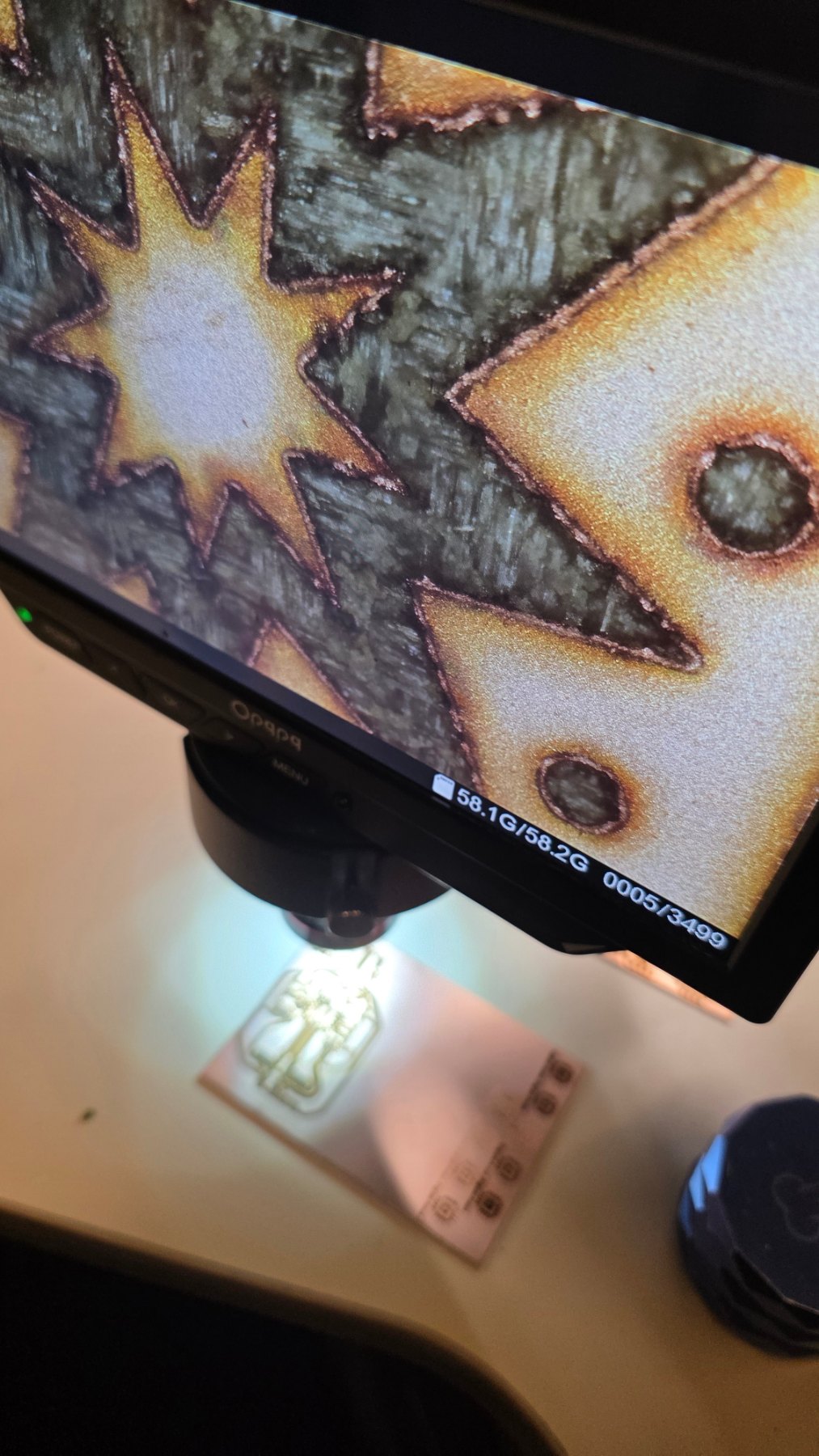
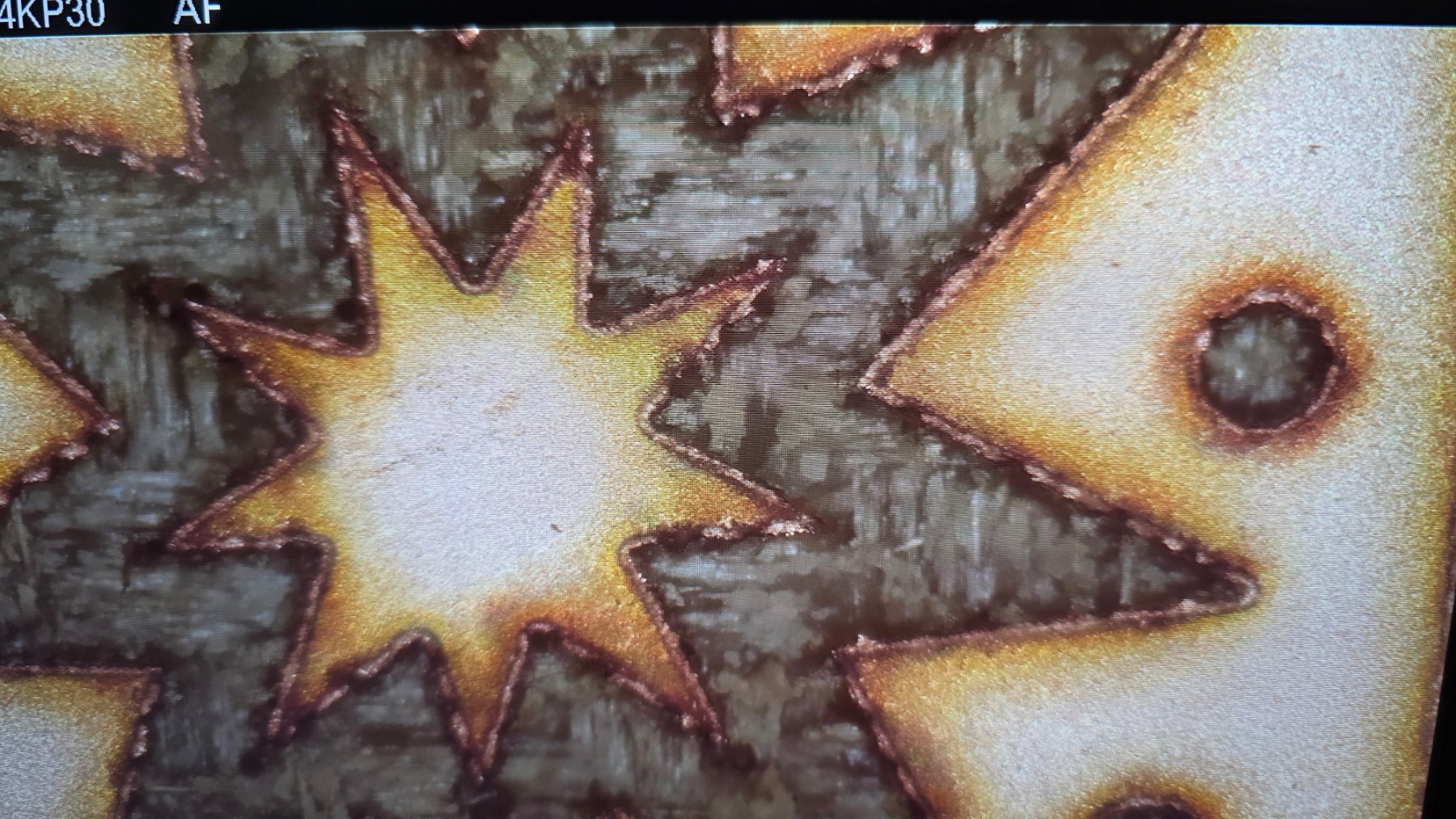
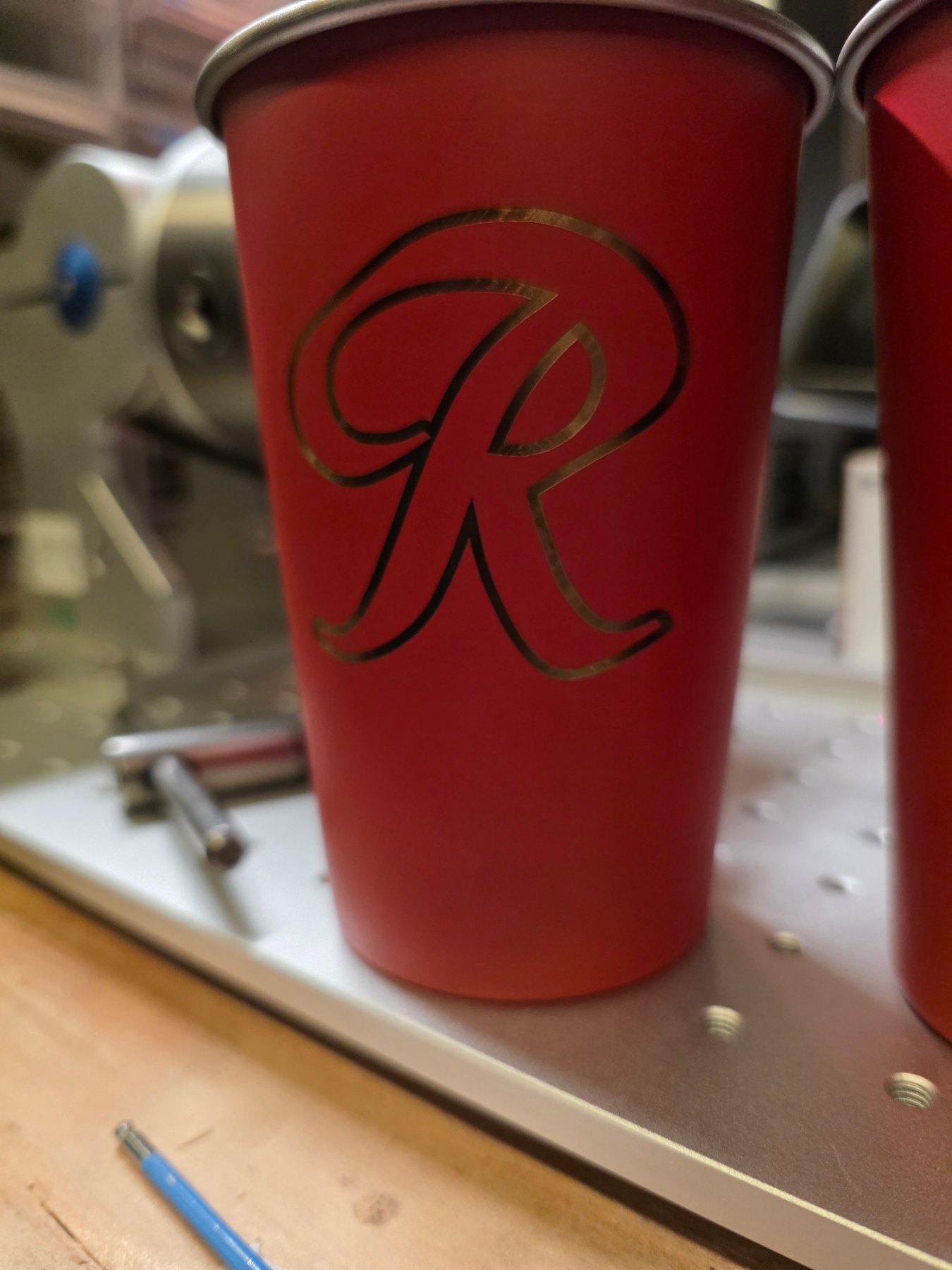
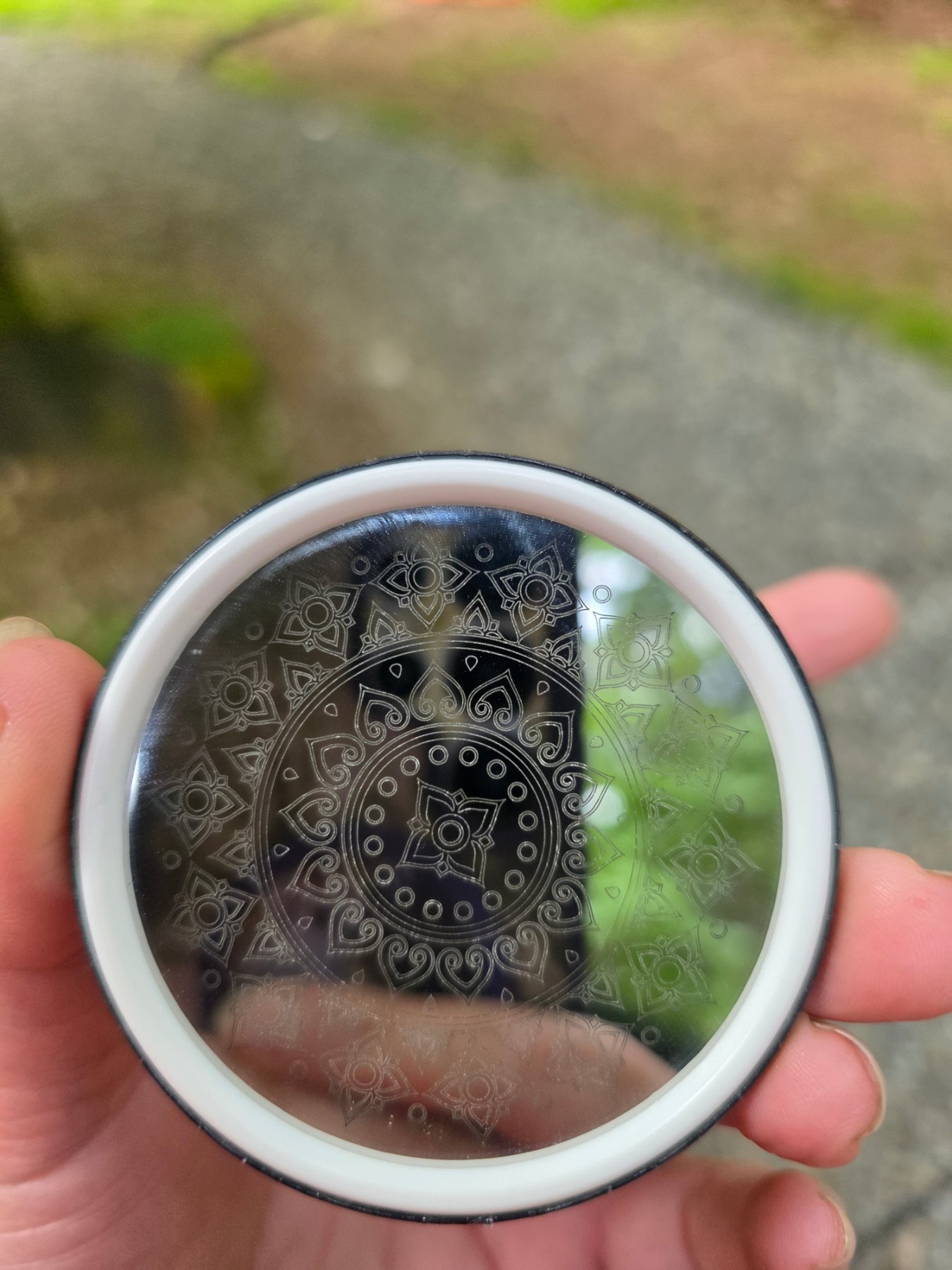
A laser is light — a great deal of it, at one exact wavelength, focused to a point. What happens when it lands depends on whether the material soaks up that wavelength or ignores it. Wood drinks in infrared and burns; glass lets it straight through; polished steel bounces it away. That is why we run several different machines instead of one: each pairs a wavelength with the materials that answer to it.

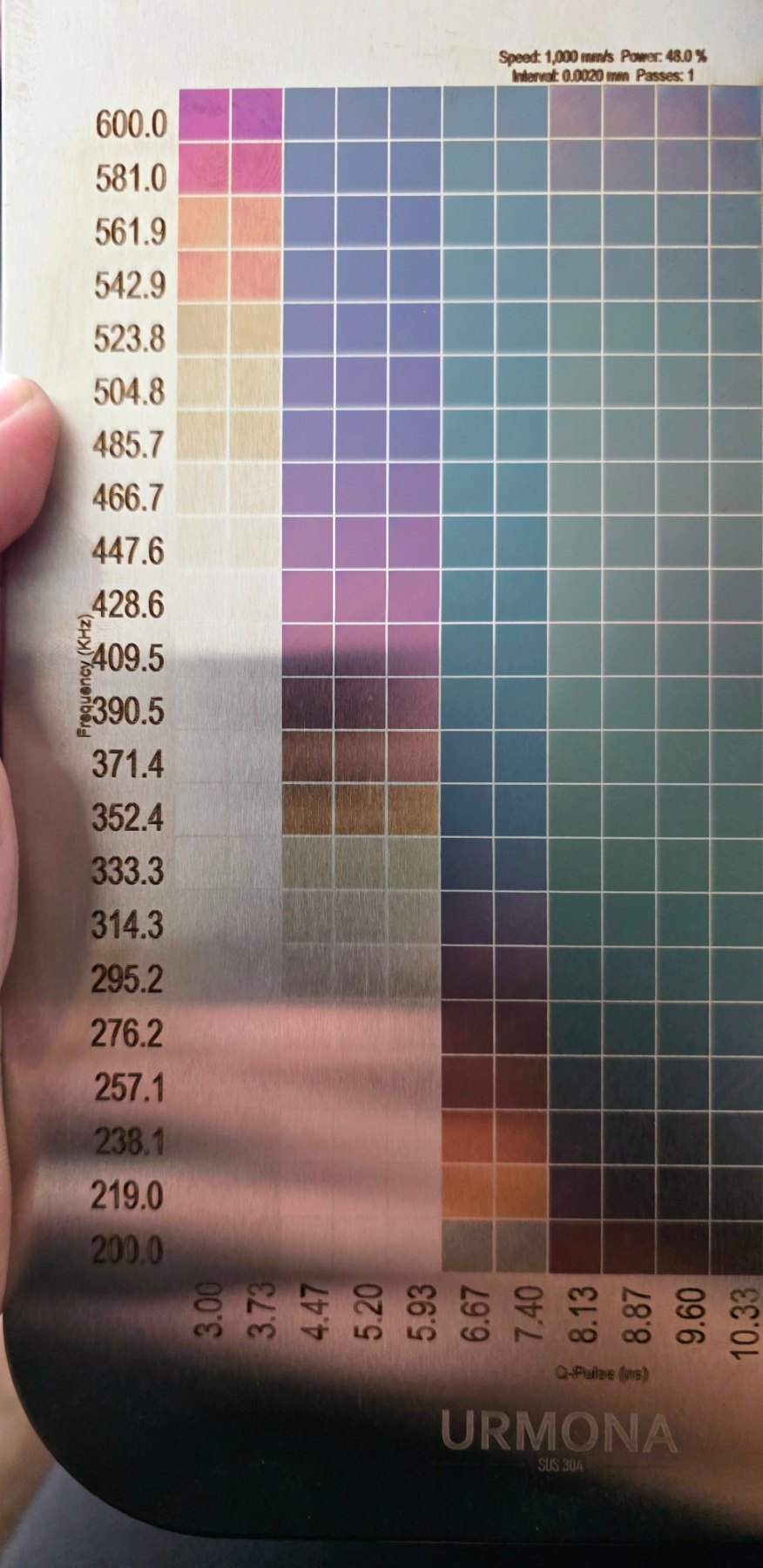
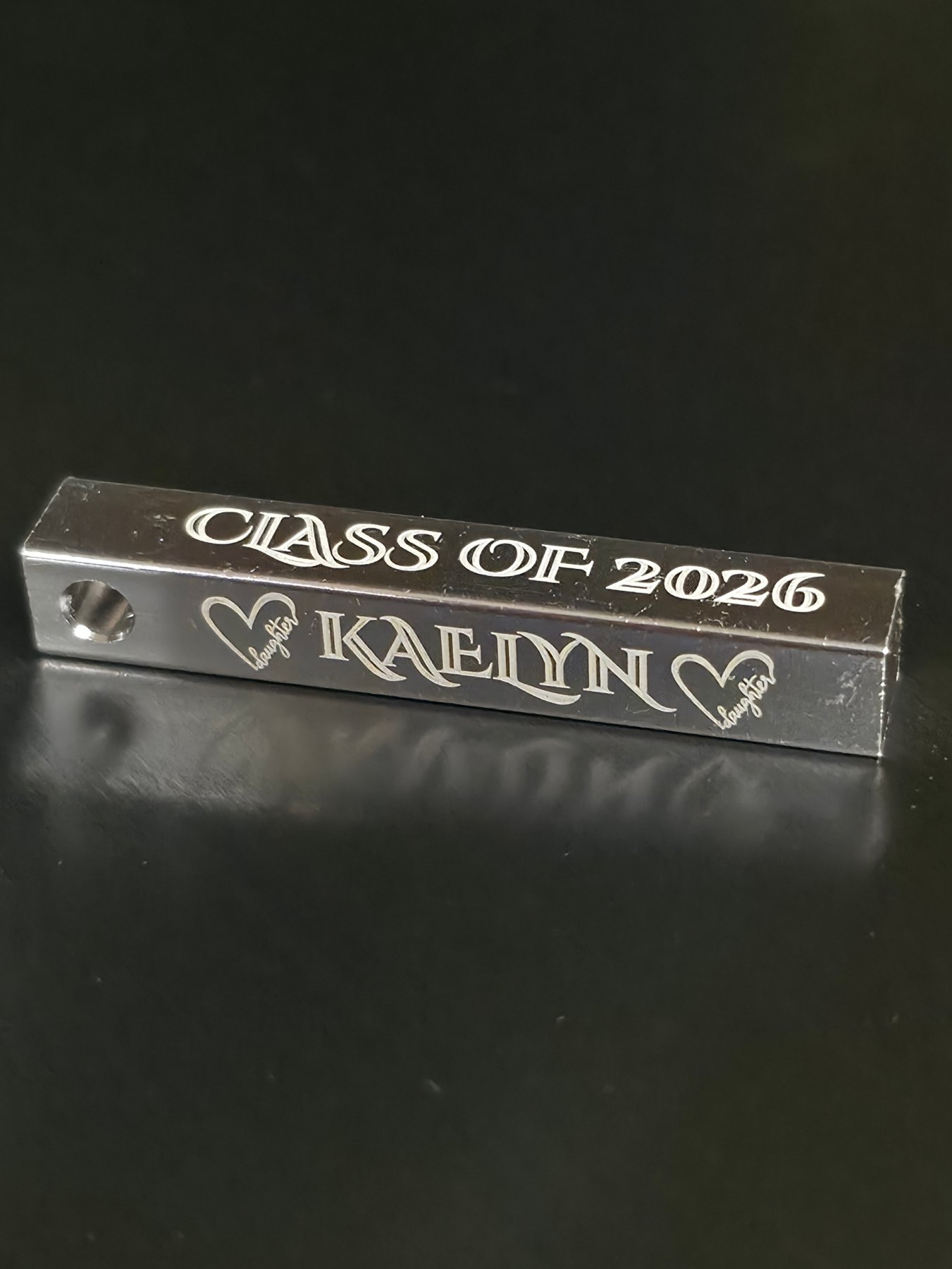
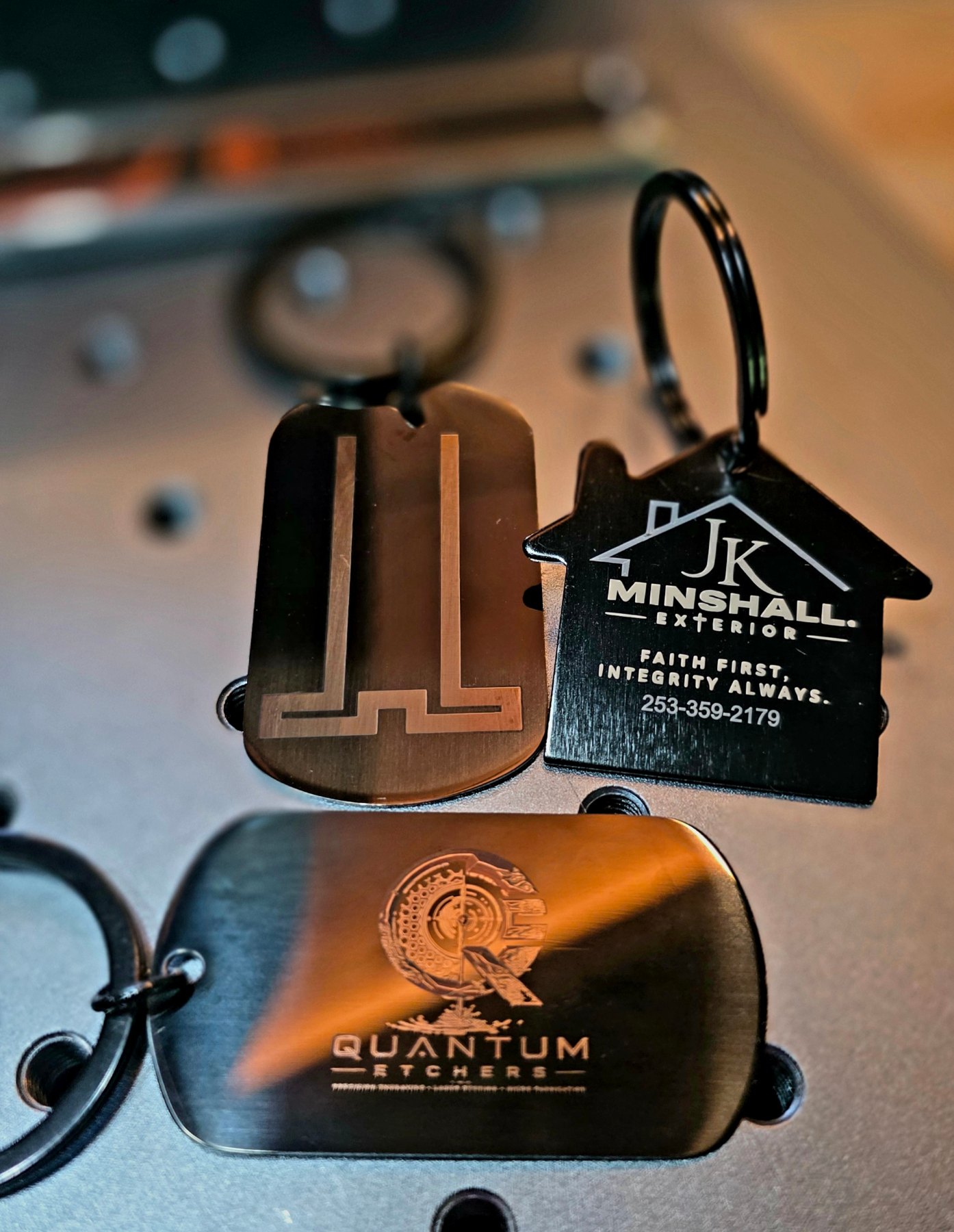
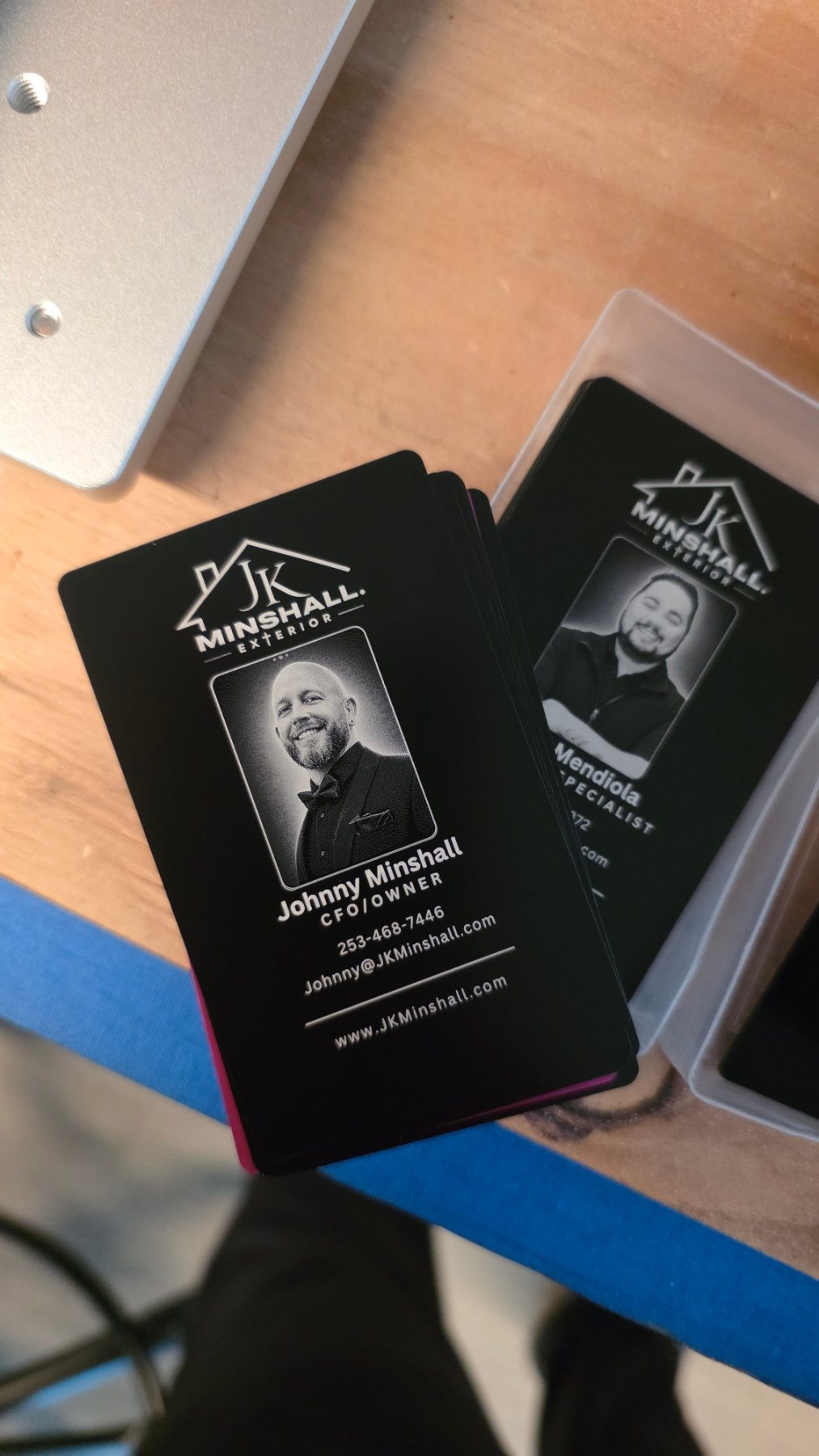
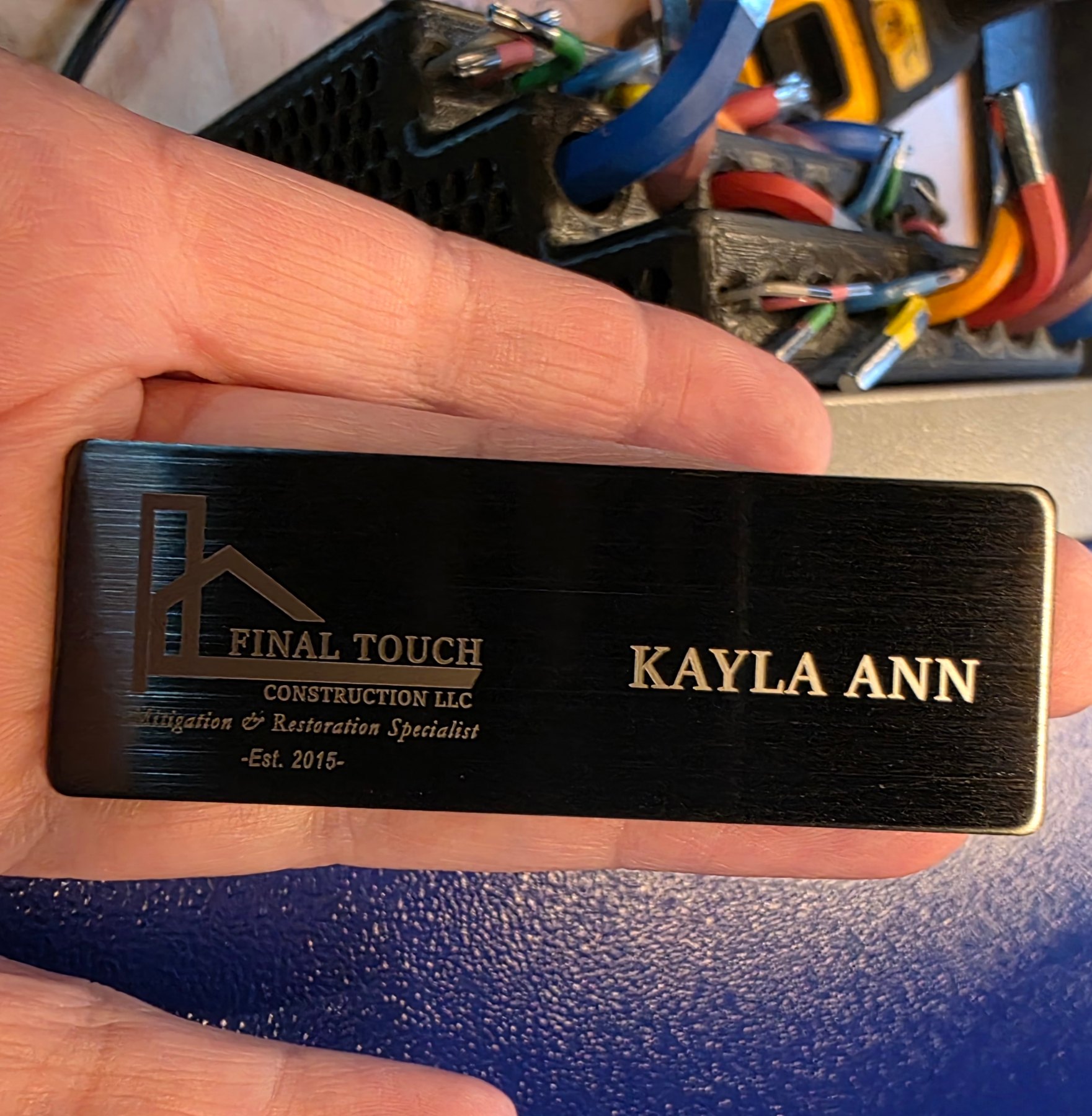
A fiber-amplified near-infrared beam is steered by two fast mirrors (galvanometers) across a fixed field instead of a moving gantry, so it is very quick and very fine. "MOPA" means the pulse length is adjustable — that control is what makes color on stainless possible.
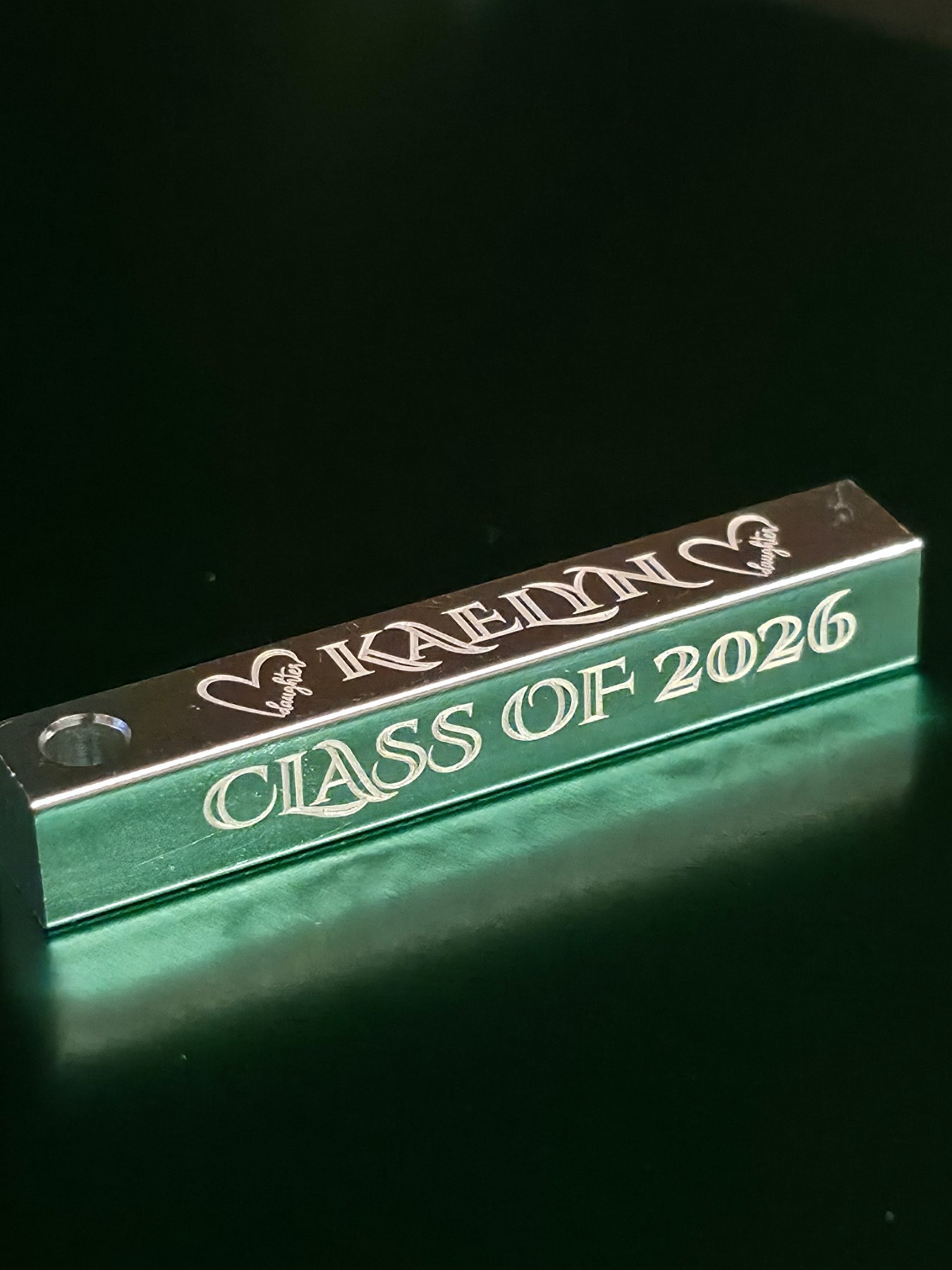
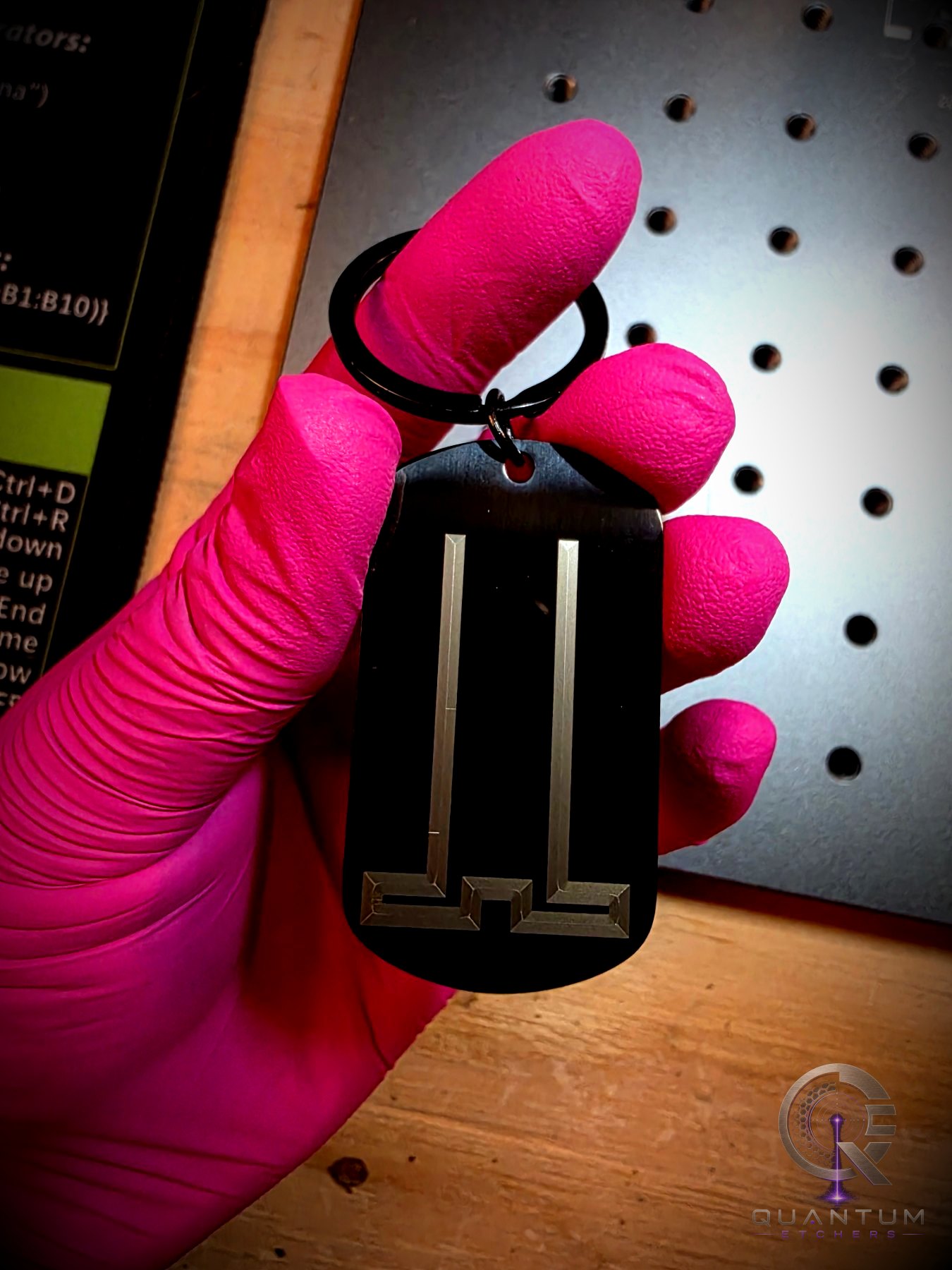
Metals absorb it. By tuning the pulse it can anneal — heat the surface just enough to grow a colored oxide layer without removing any metal — strip a coating or anodize for a bright mark, or engrave below the surface.
Permanent marks with nothing added to the part. Color on stainless and titanium comes from a thin oxide, not pigment, so there is nothing to wear off.

An ultraviolet beam, galvo-steered like the fiber. Its photons carry enough energy to break molecular bonds directly, so very little heat spreads into the part — which is why it is called cold marking.
Materials that are clear or that heat would ruin — glass, clear plastics, silicone, ceramics, coated surfaces — mark cleanly without melting, cracking or yellowing around the edge.
Crisp, very fine marks with no heat halo. It marks the surface rather than carving into it, so it is for detail, not depth.

The same far-infrared light as our CO₂ gantry, from a compact sealed source, but steered by two fast galvanometer mirrors across a fixed field instead of a moving head. The beam only has to swing, not travel, so it marks many times faster.
Everything that answers to CO₂ light — wood, leather, acrylic, glass, paper, fabric — at speed. Each pass is light and quick, so it is built for surface engraving and fine detail rather than cutting through thick stock.
Crisp, even engraving with fine detail, finished in seconds rather than minutes, which keeps a batch of twenty matching pieces affordable.

An electrically excited tube of carbon-dioxide gas produces far-infrared light, which mirrors steer to a focusing lens on an X-Y gantry. This is the workhorse: it both engraves and cuts.
Wood, acrylic, leather, glass, stone and most plastics absorb this wavelength right at the surface. A light pass vaporizes a thin layer for an engraving; a slow, heavy pass burns all the way through for a cut. Bare metal reflects it.
Deep, clean engraving. Wood cuts with a thin dark edge; acrylic cuts with a glossy, flame-polished edge; glass frosts white.

A bank of blue semiconductor diodes is focused into one beam and carried over the bed on an X-Y gantry, the same way a CNC router moves. It is the only one of our lasers whose light you could see.
Dark and organic surfaces absorb blue light well and burn under it. Clear materials let it pass straight through, and bare metal bounces it back, so this machine is for things that take a scorch.
Warm brown-to-black marks. On wood the grain shows through the burn, so no two pieces look the same.
Some jobs want full color instead of a mark. For those we now print by sublimation: photo-quality color pressed into shirts, mugs, hats, metal panels and more.

The design is printed in special inks onto transfer paper, then pressed against the piece under heat and pressure. At that heat the ink turns straight to a gas and soaks into the surface, then sets solid again as it cools.
The ink bonds with polyester, so it works on polyester fabric and on blanks made with a polymer coating: mugs, metal panels, tile and slate. Cotton and uncoated surfaces won’t take it.
Vivid, photo-quality color that is part of the surface, not a layer on top, so it won’t peel, crack or wash out. It prints on white and light colors; white itself can’t be printed, so dark pieces aren’t a fit.
Tell us about your project. The more detail you can share — material, size, quantity, and when you need it — the more accurately we can quote it.
Your account
Accounts start with a quote. Send a request below and we'll email you a link to your project — open it to create an account that keeps your projects, proofs and past quotes together. No account is needed to request a quote.
Already have one? Sign inPrefer email?
info@quantumetchers.com